Yearly Archives: 2011

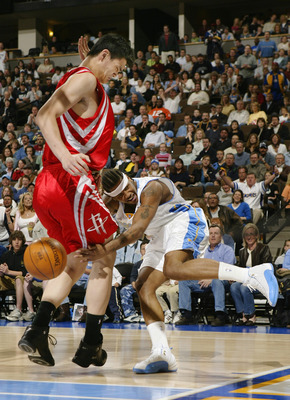
Obama on the basic framework for adversarial ethics: why international trade is like a pick-up basketball game

In his press conference following the recent APEC meetings in Honolulu, President Obama laid out a pretty basic normative framework for the adversarial institution of international trade. The question he was addressing involved the perception among American politicians and some Asian leaders that China was not exactly playing cricket.

And I think leaders in the region understand that as China grows, as its economic influence expands, that the expectation is, is that they will be a responsible leader in the world economy — which is what the United States has tried to do. I mean, we try to set up rules that are universal, that everybody can follow, and then we play by those rules. And then we compete fiercely. But we don’t try to game the system. That’s part of what leadership is about.

China has the opportunity to be that same type of leader. And as the world’s second-largest economy, I think that’s going to be important not just for this region, but for the world. But that requires them to take responsibility, to understand that their role is different now than it might have been 20 years ago or 30 years ago, where if they were breaking some rules, it didn’t really matter, it did not have a significant impact. You weren’t seeing huge trade imbalances that had consequences for the world financial system.

Now they’ve grown up, and so they’re going to have to help manage this process in a responsible way.

What he is describing, essentially, are the rules for a pick-up game of soccer or basketball among a bunch of people from the same neighborhood. You agree to a set of reasonable rules (given there are no real referees), you expect everyone to follow the rules, each person still plays hard to win within those rules, and the whole game is threatened if one or more players are consistently trying to get away with blatant cheating or fouling. Obama says, “that’s part of what leadership is about,” and here he is really talking about sportsmanship.

Obama is chastising China for gaming the rules (e.g., by not devaluing its currency), though it is not clear they ever agreed to that particular rule. This press conference also unveiled some details about a new “Trans-Pacific Partnership” that might lead to a free-trade zone. But it appears that China is not welcome in this partnership until it agrees to abide by a fair set of rules.

It’s interesting that Obama also references an exception to full compliance that is often accepted by participants in a pick-up soccer or basketball game: that you may give a younger kid a little more latitude (say, to receive a pass off-side in soccer, or to travel or double-dribble in basketball). It can be fun to watch the kid trying to play “with men” above his talent level. But it nevertheless gets pretty annoying if the kid grows up to be one of the strongest players and still expects special rules or exceptions for himself alone.

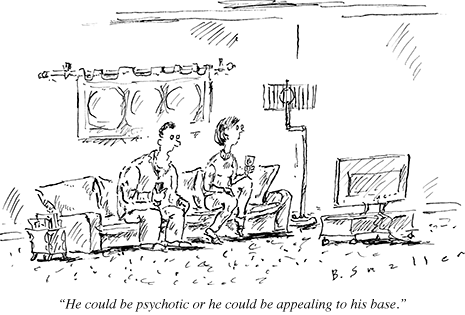
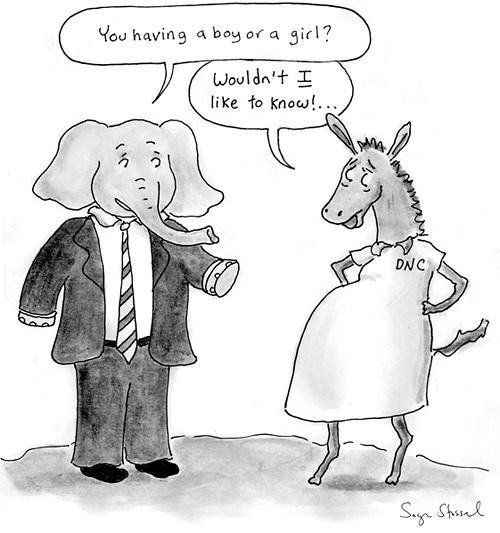
If truth is the first casualty of war, maybe mental health is the first casualty of primary-season politics

From this week’s issue of the magazine named for the citizens of the city so nice they named it twice. (Posted without permission and removable on request.)

Free trade = more regulation?

In the context of a domestic economy, a call for “free markets” or “free-market solutions” is often a plea not to regulate markets. But international agreements for free trade are by their very nature attempts to regulate international markets. As a deliberately adversarial institution, a free-trade agreement between two or more countries forbids various sharp competitive strategies that any given country can use to create a competitive advantage for itself (e.g. tactics that would allow its goods to be exported while it restricted imports from trading partners). The whole point is to solve a collective action problem between rival countries: when each country is allowed to pursue protectionist policies, say, they will all end up worse off. That is more or  less the point of Adam Smith’s Wealth of Nations. (It was not this point.)

But in today’s New York Times there’s an op-ed pointing out another interesting way to think of international free trade as involving more, not less, regulation. Layna Mosley, a political scientist at UNC-Chapel Hill, has study the way free-trade agreements between developed and less-developed countries seem to generate a regulatory “race-to-the-top” on labor standards.

There is…a more general way in which trade agreements — and the economic ties they generate — benefit workers in developing nations. As Colombia and Panama expand their trade relationships with the United States, workers stand to gain more than just the job creation and higher wages that often come with expanded trade. Research I conducted over the last several years with the political scientists Brian Greenhill and Aseem Prakash suggests that trade with developed nations helps developing countries expand labor rights themselves.

Why? International trade gives producers incentives to meet the standards of their export markets. When developing nations export more to countries with better labor standards, their labor rights laws and practices tend to improve.

With a shout-out to David Vogel’s “California effect” explanation of the way in which the state of California raises environmental standards for other states in the US, she continues:

This California effect works in two ways, both based on global producers’ own calculations of self-interest.

First, multinational companies often carry their management and production technologies with them when they produce goods abroad because, like automakers selling to California’s consumers, they find it efficient to standardize their practices in plants, regardless of location. Those practices — including rules for the appropriate treatment of workers — then set an example for other employers throughout the host economy.

Second, the multinational company knows that many consumers, activists and shareholders in its home country will judge its imported products on whether they were produced in ways that reflect the firm’s public commitment to corporate social responsibility. This spurs multinational firms and importers to press locally owned companies in their supply chains for working conditions that meet internationally recognized labor standards.

So not all unforeseen consequences of regulating contests (in this case, the contest between national economies in international trade) turn out to be perverse consequences. Not all races involving more- and less-regulated economies are races to the bottom.

[Note: click on the “race to the bottom” category link, in the right-hand column, for more posts on this general topic, mostly by star students in my Adversarial Ethics class at Duke in the spring of 2011.]


Moving the goal posts… on only one side of the field

The Big Hypothesis motivating this blog is that we can better understand several important institutions by seeing them as regulated contests in which participants who are playing to win will also benefit the public. And sometimes we might get a better sense of what exactly is wrong about some obviously dodgy activity or tactic by looking at the institution in question through this lens.

Case in point: what is wrong with politicians in power changing the rules for elections? And in particular, what is wrong with them changing the rules in ways that will reliably increase their chance of winning the next electoral contest?

Obviously, this strikes us as unfair. But why, especially when this electoral-rule-changing follows all of the legal procedures? Now this blog is non-partisan. We are interested in how best to think about institutional design and ethics across a broad range of institutions. But in America we are gearing up for a long series of electoral contests, and as it turns out, most of the accusations about “tampering” with electoral rules are being directed at Republican lawmakers. My only interest here is to see whether we get a better handle on these debates by focusing on the deliberately adversarial nature of constitutional democratic politics. A couple of weeks ago the editorial page of the New York Times was once again thundering about wide-spread Republican tampering with electoral laws. Their analysis in “The Myth of Voter Fraud” allows us to highlight two rather different rationales for rules in deliberately adversarial institutions. The thunder begins with the following claim (including a link to a recent study):

It has been a record year for new legislation designed to make it harder for Democrats to vote — 19 laws and two executive actions in 14 states dominated by Republicans, according to a new study by the Brennan Center for Justice. As a result, more than five million eligible voters will have a harder time participating in the 2012 election.

Very broadly speaking (– this is a crude working-hypothesis), the various rules that regulate adversarial institutions are justified in two ways: some of them are justified because of the way they “shape” the contest, or motivate the contestants, so that it will produce better overall results in the long run; and some of the rules are justified for reasons that, in some sense, are prior to, or beyond, the contest — say, because they protect fundamental rights. And some rules may be justified on both grounds.

We worry whenever the “players” who are supposed to be regulated by a set of rules also get to set the rules. We shouldn’t be surprised that they will try to justify the rule-changes by appealing to the latter type of principles: the ones that apply “intrinsically” — in this case the proposed rules are supposed to minimize voter fraud, something that would obviously be wrong in any electoral system. But we have to be suspicious if the players changing the rules for such “intrinsic” reasons will also systematically benefit from those changes. The burden of proof for demonstrating that the intrinsic principles really do apply in the particular case must be a heavy one indeed.

The Times is unswayed in these recent cases:

There is almost no voting fraud in America. And none of the lawmakers who claim there is have ever been able to document any but the most isolated cases. The only reason Republicans are passing these laws is to give themselves a political edge by suppressing Democratic votes.

Plenty of jurisdictions (countries, federal subunits, etc) simply don’t allow the players to write the rules for their own electoral contests: they establish non-partisan commissions for electoral law and redistricting. I’d welcome a recommendation for a good comparative study of such things.

Unwritten rules in the sweet science [updated]

In the 8th grade I finished second in my country county in wrestling (in the 99-pounds-and-under category). In the semi-final match, the referee neglected to invite me and my adversary to shake hands before the match began. He just signaled for the match to start. But since a handshake was the usual protocol, the other kid reached out to shake my hand. I grabbed his hand, performed a standard wrestling move (I don’t remember much of the jargon now), and took him to the ground. It was perfectly legal, and I was a total 99-pound asshole.

Recently, with much more than bragging rights on the line, WBC World Welterweight champion Floyd Mayweather did essentially the same thing. Here’s an account from Gordon Marino, a philosophy professor and boxing trainer, writing in the Huffington Post:

Boxing took a pounding on Friday night. The too-much-hyped championship contest between Floyd Mayweather and Victor Ortiz went down in pugilistic infamy at the end of the fourth round.

With only seconds remaining in that stanza, Ortiz had “Money” Mayweather on the ropes and intentionally head-butted him. Referee Joe Cortez deducted a point. The embarrassed Ortiz literally kissed and hugged Mayweather to express his regret. Though Ortiz claims he did not hear him, Cortez instructed the boxers to resume the action and once again “Vicious Victor” went to touch gloves. Mayweather leaned forward as if to do the same and then turned over a left hook. In that instant, a shocked Ortiz made the mistake of turning his head to the ref in protest and just as he did, Mayweather hammered him with a booming right to the chin, turning the black lights on the young fighter and ending the contest.

Most of the crowd at the MGM booed in protest at the advantage that Mayweather had taken. Debates raged all over Las Vegas and I suppose throughout the nation. No one, including Ortiz, questioned the legality of Mayweather’s stealthy move. The new champion defended himself saying that he had been fouled and that fighters are endlessly told “protect yourself at all times.”

And so the standard question: What are the best examples of this kind of gamesmanship in other deliberately adversarial contexts like business, politics, law, war, etc.?

UPDATE: there was, not surprisingly, a LOT of chatter about this move by Mayweather. Consider, for example, this piece by a blogging pastor in the Huff Post entitled “Floyd Mayweather, Jr. and the Death of the Gentleman, Sportsmanship, and Class in American Society.”

When judges compete

All open hiring processes are competitive, even when the future employees are expected to work as professionals in a relatively non-adversarial setting. So this article from the New York Times describes an intriguing attempt to regulate an adversarial processes, “Judges compete for law clerks on a lawless terrain“:

Federal judges are entrusted with interpreting and applying rules fairly and consistently. Except, it seems, when it comes to hiring their own staff.

The judges compete aggressively each year to recruit the best law students to work for them as clerks, prestigious positions that involve research, counsel and ghostwriting. But the process has become a frenzied free-for-all, with the arbiters of justice undermining each other at every turn to snatch up the best talent.

Based on rules that were intended to curtail shenanigans, judges hiring for the 2012 season were supposed to begin interviewing third-year law students no earlier than Thursday, Sept. 15 at 10 a.m. But somehow, at the federal courthouse in downtown Manhattan, most of the interviews — and job offers— had already concluded by 9:45 a.m.

Indeed, hoping to leapfrog their peers, most judges actually began interviewing hours (if not days or months) earlier.

While everyone in the process seems to agree that the competition for recruiting clerks is somewhere between “frenzied” and “insane,” there is not even consensus on whether it can be improved through “NCAA-like” recruiting regulations.

“I’m not into cartels or collective action or things like that,” says Alex Kozinski, chief judge of the Court of Appeals for the Ninth Circuit in San Francisco, who has vocally criticized efforts to regulate the recruiting process. So when does he start recruiting? “At birth,” he says.

There have been several attempts to levy self-enforced rules, similar to those used by the N.C.A.A. for recruiting young athletes, with the most recent system created in 2003. While none of the students interviewing at the federal courthouse in downtown Manhattan that Thursday wanted their names published for fear of jeopardizing their careers, many expressed frustration with the process.

“It’s insane and has been driving everybody nuts for years,” said one student from a top 20 law school who had three interviews in New York that day, and three others across the Midwest this week. “But I don’t really see any way to fix it.”

If largely self-enforced rules can’t hold because the professionals themselves aren’t willing to be self-regulating, the options seem limited. When is the last time you saw judges involved in a prisoner’s dilemma?

Unwritten rules in football

Deliberately adversarial institutions are highly regulated, and closely monitored. But for a variety of reasons there can’t be an effective or enforceable rule against every kind of behavior that seems “just wrong.” So there are generally a lot of “unwritten rules” and various written and unwritten “codes of honor” that participants expect each other to adhere to.

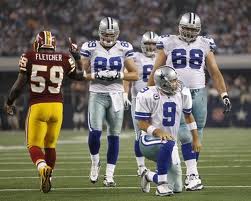
Last week the Dallas Cowboys’ quarterback, Tony Romo, took the unusual step of accusing his opponents of violating one of those rules. Here’s a quote from the NFL.com story, “Romo accuses Redskins of cheating on snap count“:

Cowboys quarterback Tony Romo blamed the Washington Redskins for the problems he had fielding snaps from center Phil Costa in Monday night’s sloppy 18-16 Dallas victory. Costa snapped the ball a number of times before the quarterback was ready.

Romo accused Redskins defenders of yelling out their own snap count, attempting to fool Costa, according to ProFootballTalk.com.

“We’ve got to get the snap thing worked out,” Romo told reporters after the game. “We’ll get that worked out. We’ll tell the league and see if that’s something that can be fixed because you’re not supposed to be able to do that. So we’ll see. But we can’t have that happen. We shouldn’t have been in that situation.”

Now, as it turns out, the NFL does have a rule against this behavior. This shouldn’t be surprising, since the NFL, more than any other major sport, is prepared to try to solve any problem with a new rule and close monitoring. But this is clearly one of those rules that’s difficult to enforce. It relies on players recognizing that this is “not cricket,” as they say.

With any post on “unwritten rules in sport/institution X” we will finish with the same general questions: What examples are there of unwritten rules in other deliberately adversarial institutions that are similar to defensive players in football mimicking the offensive quarterback’s snap count? And why, exactly, is this kind of tactic unseemly?

(Incidentally, there are plenty of examples in nature of predators mimicking signals its prey species uses in order to lure them to their demise. So much for natural justice.)

Redistricting post-Citizens United, y’all

This blog has been sleeping for WAY too long. Let’s try to get it rolling again, at least as a place to continue flagging a wide variety of ethically and politically charged issues that arise within deliberately adversarial institutions.

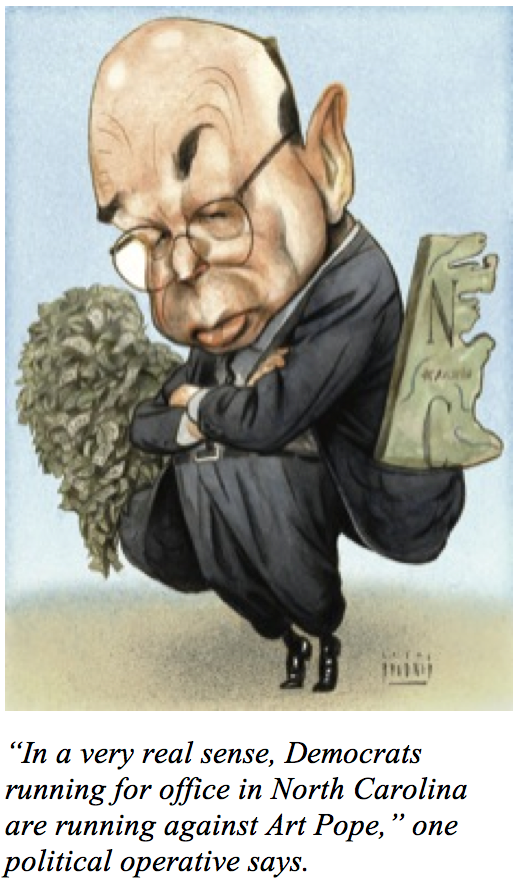
There have been a few redistricting controversies recently. (Is there actually a “season” for redistricting, or does it happen on different timetables all over the country?) These are always potentially problematic: they amount to changes in the “rules” of the contest that can significantly affect the outcome of the contest — and yet in most states in the US, some contestants themselves (elected politicians) are often in a position to manipulate the rule-change (by changing the boundaries of electoral districts) in ways they help them win. As a strategy for winning elections, it seems a lot closer to bribing the referee than to winning because you are more talented player.

In any case, here is a long story in the New Yorker about an elaborate “plot” (or “strategy,” depending on your political affiliation) by Republican strategist Ed Gillespie, and bankrolled by multimillionaire Art Pope, to gain control of state houses in order to get favorable redistricting for federal congressional elections.

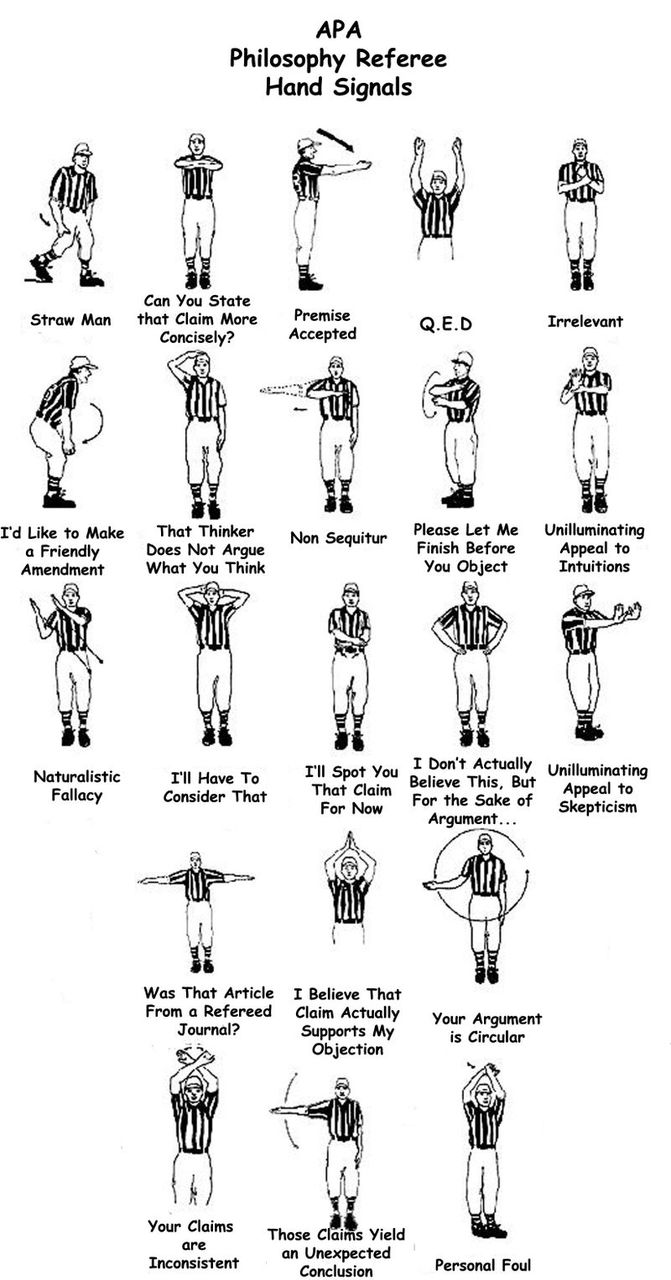
If only academic disputes came with live referees…

A deservedly viral proposal for the American Philosophical Association.

Created by Landon Schurtz

My favorite is the middle signal in the second-last row. It is the signal for a “safety” in American football — when a team is unable to carry the ball out of its own endzone and concedes two points; like an own-goal in soccer.

The ethics of not voting

This new book, The Ethics of Voting, by Jason Brennan, looks tailor-made for our blog. I’ve just ordered a copy, but as advanced publicity for it, here’s a quick shout-out.

In democratic theory we rightly pay a lot of attention to the design of the system — especially the electoral system and campaign finance. And we pay some attention (as Bethany and Justin have in posts here and here) to the obligations of professional political actors. But what about the obligations of those other participants in the democratic system, the citizens and voters?

As the blurb says:

Nothing is more integral to democracy than voting. Most people believe that every citizen has the civic duty or moral obligation to vote, that any sincere vote is morally acceptable, and that buying, selling, or trading votes is inherently wrong. In this provocative book, Jason Brennan challenges our fundamental assumptions about voting, revealing why it is not a duty for most citizens–in fact, he argues, many people owe it to the rest of us not to vote.

Somebody had to say it. Amen.

“From each according to ability, to each according to need?” Not in sports! Or Politics 101: Learn to play the game, fairly or not

Frank Knight, one of the founders of the so-called “Chicago School” of economics, took seriously the idea that markets are a kind of game. But he wondered whether something that is both a game and a system designed to satisfy wants could be fair.

“In a system which is at the same time a want-satisfying mechanism and a competitive game we seem to find three ethical ideals in conflict.  The first is the principle already mentioned, of distribution according to effort.  The second is the principal of ‘tools to those who can use them.’  This is a necessary condition of efficiency, but involves giving the best player the best hand, the fastest runner the benefit of the handicap, and thus flagrantly violates the third ideal, which is to maintain the conditions of fairness in the game.” (“The Ethics of Competition,” p. 54 [1923])

There is no reason to think the system or game can meet all of our ethical expectations. If winning is a priority for the team, can we expect them to play fair? Does being fair to the team and its fans (e.g. by giving them the best chance to win) require being unfair to certain players (e.g. not letting them play because they aren’t as good)? And are these notions of fairness in games appropriate in settings dealing with people’s livelihoods? Is it right for firms to give some workers benefits that others don’t get? Should firms be able to horde secrets that might make all firms more efficient if they were shared?

So what is fair and what is foul in sports or business? Knight seems to be suggesting that it is hard to tell because we have at least three “ethical ideals” for justice and they each give us different answers to this question.

Race-to-the bottom watch: competitive babies?

This spoof cover from the Onion advertising “How to get your premature babies into the best incubators” presents a comical account of parents anxious to give their children a leg up on the competition.  The humor of the cover, however—like the comedic value of most good jokes—comes not from its outlandishness but from the close-to-home truth it conveys.

Particularly in the fields of academics and athletics, parents are reacting to competitive pressures by pushing their kids to start earlier and work harder.  The 2008 documentary Nursery University documents how some New York City preschools are charging up to $20,000 per semester per child—higher than the average tuition of private American universities.  It should come as no surprise that this escalating preschool market is taking place in one of the most densely populated places in the world.  The high volume of children in the city results in a high demand for a limited amount of spots at “elite preschools.”

Many bloggers, including economics professor Charles Wheelen, have noted that participation in sports has also become increasingly competitive among younger players.  The goal of little league – in which I was taught “to have fun”—is slowly fading away as parents and coaches enforce the omnipresent urge to win.  Sometimes pursuing the goal of winning even comes at the cost making kids prone to certain kinds of avoidable injuries, which at times even eventuate into the need for reconstructive surgery.  Wheelen writes:

“If all of this makes kids and young families happier than they were 20 years ago, terrific.  But I don’t think that’s what is going on.  As far as I can tell, sports have three purposes: To get exercise, to have fun or to get your kid into college, earn a scholarship, turn professional and become rich and famous.

The evolution in youth sports appears to be mostly about the third one.  Here’s the problem with that:  The number of scholarships (and college athletes) is more or less fixed.  So is the number of professional athletes and the total amount of money to be won on the PGA Tour.

If everyone practices three times as much, the same folks will probably end up with the scholarships, prize money and Nike endorsements.  And if we assume that the extra practice, coaching and spending on equipment comes at the expense of other things (like riding a bike for fun, playing other sports or doing something really crazy like playing ‘kick the can’ in the backyard for a few hours), then our kids’ lives are worse for it.”

Perhaps the most problematic aspect of a race to the bottom is the difficulty or impossibility of escaping it.  If parents prevent their children from starting competitive sports until they are ten years old or even older, then those kids will have to live with a competitive disadvantage unless all the other parents make this same decision.  On the other hand, pushing kids into sports and preschools earlier and earlier degenerates into a race to the bottom in which everybody comes out worse off.

It remains to be seen what mechanisms could prevent this collective action problem.  Wheelen points out that little leaguers are operating with fewer regulations that professional athletes.  While this lack of regulation used to suffice due to a lack of necessity, it seems increasingly possible that regulations are needed to protect even the youngest of the current generation from plunging into various races to the bottom.


Race-to-the-bottom watch: The sensational path to the gutter

In today’s 24-hour coverage by cable and internet news media, keeping abreast with current events has become more convenient than ever, but has the increased quantity of news come at the expense of quality?

The ubiquitous nature of news as a product of technological innovation has created a fierce competition among media outlets. Cable news networks such as FoxNews, CNN, and MSNBC compete daily to increase their market share of a limited number of viewers. In this market of perfect or almost perfect substitutes, the logical option to beating your competitors would be to try as much as possible to differentiate your product from the rest of the field, and this is exactly what cable news networks engage in.

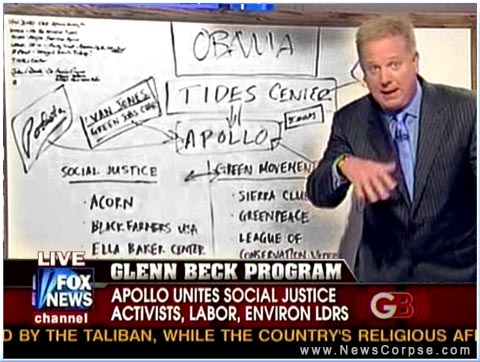
A favorite strategy of networks in distinguishing their products is to rely on the over-the-top personalities of their journalists. As a consequence, we have seen a gradual shift of importance away from the news and towards the newscaster, as the voices of Glenn Beck, Bill O’Reilly, Mike Huckabee, Rachel Maddow, Keith Olbermann, Lou Dobbs, and many others work to define a particular station’s unique image. The assumption underlying this trend is that news on its own is not enough to attract viewers; therefore, networks compensate for the dull news with flamboyant hosts (and extreme guests) who do extended opinion shows on the events of the day.

The conundrum is that as one network becomes more entertaining, the others have to scramble to catch up if they want to avoid being left in the dust.  So far, the three major networks have all done their share to stay competitive, but what has been left in the dust is the news they were originally intended to report.

A recent study done by the WorldPublicOpinion.org found that, while there is a significant number of misinformed viewers of all cable news outlets, FoxNews viewers are the most likely to be misinformed about objective facts in current affairs. This may come as no surprise however, as the industry incentives to sensationalize have, for example, frequently led FoxNews’ primetime pundit Glenn Beck to turn world news into entertaining puppet shows for his audiences to enjoy. And puppet shows are not even the end of the story. Some viewers have even turned exclusively to Comedy Central’s Colbert Report or The Daily Show for their portion of the day’s news.

For cable news, the race to entertain viewers has led to a race to the bottom in factual reporting. In order for a network to be competitive, it has to have its own brand of radical anchors that cater to a specific and ever-more partisan audience. The result has been the creation of a perpetually polarized atmosphere and an uneducated viewership. Only time will tell if the demand for entertainment news programs will continue or if viewers will become disillusioned and seek alternative or additional sources for news, hundreds of which are already available online.

What if… adversarial relations are good in their own right?

So far in this blog we’ve had a lot of discussion about the ethical nature of adversarial interactions, and much of it has revolved around the moral acceptability of certain potentially shady practices – whether in business, law, sports, or politics.  The easiest way to justify some of these dubious practices is to point out how the entire system, or “game,” in which they operate has better overall consequences than its non-adversarial alternatives.

The 19th-century German philosopher, Friedrich Nietzsche, was no fan of such philistine Anglo-Saxon consequentialism. He turned the stone tablets upside down and asks an entirely different question: could adversarial institutions be morally justified solely on the grounds that their competitive nature is something of intrinsic moral value?

“What is a life of struggle and victory for? … the Greek genius tolerated the terrible presence of this urge [to struggle] and considered it justified; while the Orphic movement contained the idea that a life with such an urge at its root was not worth living.  Struggle and the joy of victory were recognized – and nothing distinguishes the Greek world from ours as much as the coloring, so derived, of individual ethical concepts, for example, Eris and envy.  And not only Aristotle but the whole of Greek antiquity thinks differently from us about hatred and envy, and judges with Hesiod, who in one place calls one Eris evil – namely, the one that leads men into hostile fights of annihilation against one another – while praising another Eris as good – the one that, as jealousy, hatred, and envy, spurs men to activity; not to the fights of annihilation but to the activity of fights which are contests.” (Frederich Nietzsche, Homer’s Contest, 1872)

Who has Nietzsche got in his bracket?

We describe in great detail the ethical norms of everything from the World Cup to the World Trade Organization, but the 19th-century German philosopher Nietzsche (as discussed in a previous post, here) invites us to consider the possibility that sheer competition is valuable in and of itself.

So what would Nietzsche think of the Tournament?  For those currently taking up residence under a rock (evidently one with internet access), the NCAA Men’s Basketball tournament is simply a big deal.  TV ratings skyrocket, Economists complain of the hundreds of millions of dollars lost in office productivity (oxymoron noted) across the country, and the Leader of the Free World takes a stab at picking the winners.  But what’s the fuss about?  The tournaments of the last two years should suffice as an example.

In both tournaments, parity has been the name of the game around college basketball – once tournament time comes around, all sixty-some-odd teams are on the same playing field.  Fans go berserk for upsets galore, but not, I think, so that more difficult teams are eliminated, paving the way for their own favorite.  I would argue that  only the true killjoys hope for all the No. 1 seeds to win their games as expected (I’m sorry, Mr. President).

What is interesting about this, however, is that one would expect that the truly epic games would be heavyweight bouts rather than these popular David-and-Goliath rehashes.  One would also expect that the tournament is held to determine who is the best team in the land.  But we all know for absolute certainty that we don’t care if the “best team” wins – in fact, in our heart of hearts, we root against it with all our might.  So what do we want?

Nietzsche discusses the Ephesians’ banishment of one of their foremost citizens, saying “Among us, no one shall be the best; but if someone is, then let him be elsewhere and among others” (Homer’s Contest, 1872).  This weekend, it’d be worth reflecting on whether we’re hoping to discern who the “best team” is.  However, I think this answer is a resounding “no”.  Six games of single-elimination wouldn’t come about that way.

What we’re really in it for is a wild ride.

When discussing adversarial ethics, we become concerned with the regrettable situation which happens in contest, whereby someone must lose.  However, what if the real pity in this weekend’s Final Four is that someone has to win?  The contest must end, and as an unfortunate byproduct, we must have a champion – not necessarily the best team, mind you, but a champion.

In the interest of full disclosure: this last year – when Duke was still very much alive in the Final Four – I was, of course, focused like a laser beam on the process of crowning a champion. But with Duke out in the Sweet 16 this year, my thoughts seem to have turned decisively to a certain 19th-century German philosopher…

A friendly chat about adversaries

This blog got plenty of free publicity last Friday when I (Wayne Norman) did a turn on Duke University’s weekly “Office Hours” live tweet-in show. For better or for worse, the conversation should be permanently accessible here:

Some of the topics of conversation were plucked from my other blog, This Sporting Life, including one on Why the NCAA Tournament is the American Idol of Sports, and What’s Wrong with the Wonderlic Test.

Bethany’s post here about what we learn about political ethics from primary elections also got a quote and a shout-out during the interview, and it can be found here. Stay tuned for some of her follow-up thoughts on that topic.

Political Power Play: The Game of Politics

We often ideally think that democracy is about taking the political equality of all citizens seriously. It’s about giving them an equal voice and vote, encouraging them to participate, allowing their views to be fairly represented, and facilitating an open and respectful dialogue in the search for the best solutions to the collective problems of society.

In reality, democratic politics are not that pretty. “Adversarial” might not be the first word that pops into our minds when we think of democracy in the US, but maybe it should be. The electoral system in the United States is fundamentally adversarial in nature: parties and candidates are encouraged to play to win.

As citizens in a constitutional republic, every American has one equal vote to elect representatives to the government in each electoral cycle. Elections pit candidates against each other in a competition for power. Almost all the offices of government, from Congress to the Presidency, are elected within this adversarial framework which requires them to compete against other candidates in order to gain or hold their jobs. Although most people don’t want to think of electoral politics as a game, a game is precisely what electoral politics looks like, except the prize for winning is a whole lot bigger than a ring or a trophy—it is power.

This is the first of a series of posts in which I will explore different angles of thinking about democratic politics as a game: one that is heavily regulated to help it achieve certain desired ends, and one that demands a degree of “good sportsmanship” from the players, to be sure. The open question at this stage is whether this way of “framing” democratic politics will help us evaluate and analyze both normative and empirical questions about democracy more clearly and effectively.

Why do we have this adversarial system of elections? What non-adversarial alternatives might there be? Is there value, moral or otherwise, inherent in this system; or is it justified entirely by the ends it might promote? Then there are more specific questions of function—if the system really is like a game, what are the rules that govern how it is played or ought to be played? What constitutes fair versus foul play? Who are the referees, what powers ought they be given, and how do we ensure their impartiality? These are just a few questions that I hope to address in later posts.

The Primaries: what doesn’t kill them makes them stronger?

That special time of the election cycle is approaching us—the primaries. A time when members from the same party begin a four to six month cycle of in-fighting that makes even the nastiest of family arguments look like a walk in the park. I have always found the American Presidential Primary system to be fascinating because of the quick shift that the Democratic and Republican (and…Tea??) Parties must undergo between competition and unification. They compete heavily and often ruthlessly for the nomination amongst their own party, but then everyone in the party is expected to turn around after the convention and promote a unified stance behind whoever the nominee may be.

Essentially, what we see in American politics is that our entire political system was established to be a very deliberately adversarial institution. Americans believe that a one-party system, without debate and negotiation, can lead to corruption, or—our Founding Fathers’ biggest fear—a non-representative monarchy. But, within this system we have developed political parties, which are not deliberately adversarial institutions. Yet, every four years the parties break their norm of cooperation and, essentially, become adversarial institutions in order to attempt to elect the candidate who will win the White House.

This seems pretty unusual, right? Well, I would argue that this is actually a commonplace practice amongst many institutions that are not necessarily adversarial in and of themselves, but must compete in a larger adversarial context. Law firms are perhaps the greatest example. The American legal system is very adversarial, but law firms themselves are supposed to be cooperative bodies that are working towards the same goal. However, in order to motivate employees and attempt to rise to the top of their field, law firms often create inter-office competitions that pit employees against one another.

After: It's a different story after the primary, when party unity trumps all.


The American Presidential election system is often criticized, and as we begin yet another election cycle the pundits and criticism will rise anew, but maybe we should all think more about why it is designed this way and how effective competition can be first.

Should responsible regulators follow the letter or the spirit of the law?

We typically expect ethical companies to follow not only the letter of the law, but also the spirit of the law. And in some cases, we would say that they should follow the spirit of the law rather than the letter. For example, if your washing machine breaks the day after the 3-year warrantee expires, you might think that an ethical – or even just reasonable – appliance manufacturer would nevertheless fix it for free.

By the same token, shouldn’t we expect responsible regulators and other government officials to respect the spirit of the law as much as the letter – and perhaps even to let the spirit override the letter some times?

Test your intuitions on the following case.

The Medicines Company engaged in a 9-year legal battle with the FDA and the United States Patent and Trademark Office, on whether it will be allowed to extend the patent on its blood thinner drug Angiomax until September 2014. The legal battle stemmed from the failure of the company to file its application for renewal within the 60 days allotted.

“The Medicines Company, based in Parsippany, N.J., learned of Angiomax’s approval by fax from the F.D.A. at 6:17 p.m. on Dec. 15, 2000, a Friday. It applied for the patent extension on Feb. 14, 2001. That is either 61 or 62 days after the approval, depending on whether the approval date itself is counted.”

Medicines Company contended that since the original fax was sent after 5pm the clock should not have started until the next business day allowing them to fit the law. The company pointed to the fact that the FDA marks anything received by their office after 5pm as received on the next business day. This administrative mistake could have cost the company over a billion dollars, and given its small size (with only one other drug on the market) marked the end of the company.

Big picture here isn’t just about one company’s struggle against the patent office and FDA, it is about the role of regulators in the pharmaceutical industry and the spirit of the law. Do we want our regulators to be inflexible in enforcing written laws or would we prefer some discretion allowed by administrators? Should they look to the spirit of the law, and not merely to its letter?

Sometimes the courts say, Yes. After 9 years of fighting and over $4 million spent on lawyers and lobbyists, Medicines Company won their legal battle.


Race-to-the-Bottom Watch: Are We Drowning in Advertising

Advertisements are everywhere.  Cabs and busses are covered in full-size ads, billboards are placed every 50 yards along highways, YouTube now plays ads before you can watch the video you intended, TV events are created out of one-sentence announcements (e.g. Heisman Trophy presentation, American Idol final), pop-ups pervade web browsing while we simultaneously find ads for pop-up blocker applications, high school prom dances turn into ads for the usefulness of duct tape, and people are ever getting paid to get advertisements tattooed on their bodies.  A 2009 study suggests that the average American adult spends over an hour a day watching advertisements on TV alone.

But really, you’ve got to feel sorry for the advertisers, don’t you? Think about it: the more ads that are put into the public domain, the less effective each individual ad becomes.

This stems from the fact that advertisers are competing to satisfy the existing and limited demand of a consumer base, rather than creating new demand.  Think of the sheer volume of ads for food and drinks.  These companies are not assuming that without advertisements people will just not eat at all; rather, they assume that people are going to eat somewhere, and advertisements are intended to direct the consumers’ demand in their direction.

While there is a certain amount of demand created by advertisements, advertisers aren’t so naïve as to assume that they can convince you, with a single 30-second spot, to buy a brand new car out of the blue.  Rather, their primary interest is to direct, and at times exaggerate, a consumer’s existing desires.  This means that marketers are essentially competing to win the same consumer demand, and consequently, with each entrance of a new competitor, the old ones have to fight even harder to maintain its market share.

Imagine visiting a city for the first time and getting lost on your way to the hotel.  Contrast the following scenarios:

Scenario 1 –You pull over and ask someone for directions.  The person says they know where you are intending to go and gives you concise enough directions to follow.

Scenario 2 – You pull over and ask a group of people for directions.  They all say that they know where you are intending to go and each gives you concise enough directions that you believe you can execute—however; everyone in the group gives you a different set of directions that lead you to altogether distinct places!

Presumably in scenario 1, you would simply follow the directions you were given, but scenario 2 seems much more confusing.  Whose directions are you to follow?  The person who has lived in the city the longest?  The one who seemed most confident?  The one who claimed to be a taxi driver?  The one who claimed to be a doctor?  The one who was most well dressed?  In fact, the situation seems altogether so confusing that you will probably reject all of their opinions and ask a new person or try purchasing a map.

The same confusion arises when advertisers compete for your demands.  The more businesses that decide to advertise, the more the existing advertisers have to shout louder, in more places, and in smarter ways in order to get your attention.  This ultimately leads to more and more of our dollars and minutes being spent on advertisements every year. We are, in short, in a commercial race to the bottom wherein the more effort that is expended leads to not only fewer gains but higher costs for both businesses and consumers. 

Race-to-the-Bottom Watch: Fishing for Trouble

What’s the most deadly occupation in America? According to the U.S. Bureau of Labor Statistics, it’s fishing. Commercial fishing, to be precise. Why is fishing so dangerous? Fisherman can be trapped in a perfect storm of collective-action problems and, well, actual storms.

The harsh competition in this already dangerous industry is leading workers to labor in ever-worse sea conditions in order for businesses to stay afloat (so to speak). The best fishing grounds are often found in the most treacherous seas, and the clock ticks down quickly in some fisheries (say, the crab fishery off the coast of Alaska) where the seasons last only a few weeks. When one vessel decides to go out in stormy weather in order to get a competitive edge, crews of other vessels are faced with the dilemma of either falling behind the competition or following suit in braving the potentially life-threatening conditions.

This dilemma is only exacerbated by the depleted state of many of the world’s most important fisheries.  In an effort to stem the “tragedy of the commons” of overfishing, authorities have commonly resorted to setting an overall limit of fish that can be caught in a given fishery for a given season.  The approach of giving an aggregated limit breeds intense competition because each fish caught by one fisherman entails one fewer available to all the others.  This creates what has become known as a “race to fish” wherein fishermen are willing to do almost anything in order to nab a greater share of the overall quota before it runs out, including foregoing safety precautions.

So this race to fish is really a race to the bottom. One crew deciding to risk the elements in order to gain a competitive advantage starts the race. But once the other vessels join the competition by going out in perilous weather conditions, the competitive edge that motivated the first mover vanishes, while the risk of death for all of the fishers increases.  Thus, in the race to fish we can see how individuals attempting to act in their own interest, while responding to the actions of others attempting to do the same, can all end up worse off.

Is there any way out of this race to the bottom? Some authorities have replaced the overall quota with individual allocations to prevent such fierce competition.  Critics protest, however, that this solution does not live up to the free-market principles of American capitalism.  However, it is evident that the case of a totally free market for fishing (in which fishers and their customers do not pay the cost of replenishing the fish stock) is likely to lead to overfishing and ultimately the end of any kind of market for fishing. What if the rights of individual allocations were auctioned off in advance?


The Hesitant Hand: what Adam Smith did and didn’t say about government regulation, corporate lobbying, and CSR

Ethics for Adversaries has been on spring break, but should be roaring back to life in the coming days.

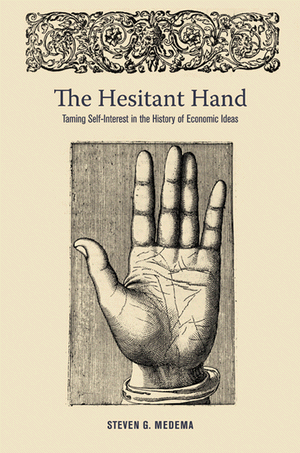
Here’s a newish book I’ve just ordered on the history of Adam Smith’s Great Idea — the one that still frames so much of our thinking about the ethics of deliberately adversarial institutions. (Steven G. Medema, The Hesitant Hand: Taming Self-Interest in the History of Economic Ideas.)

I just hope the book is better than the first line of Princeton University Press’s blurb, which seems at best skewed and revisionist, and at worst just false:

“Adam Smith turned economic theory on its head in 1776 when he declared that the pursuit of self-interest mediated by the market itself–not by government–led, via an invisible hand, to the greatest possible welfare for society as a whole.”

It is well-known that the famous phrase “an invisible hand” (not even “the invisible hand,” which is what we tend to say now) was used only once in the massive two-volume Wealth of Nations. It comes in a chapter railing against Restraints on the Importation of Goods. Much of the chapter concerns what we would now call the law of comparative advantage — that is, about why it is to each country’s advantage to produce what it can produce most efficiently, and to trade abroad for what can be produced more efficiently in other countries. Throughout the chapter and the book Smith points out the myriad ways restrictions on international trade create inefficiencies. And also how these restrictions inevitably come from business people lobbying gullible or corrupt politicians in order to secure domestic monopolies.

But not only is it inefficient to restrict imports of goods produced more efficiently abroad, it is usually unnecessary. Business people prefer to keep an eye on their investments and to be able to trust the people they deal with, so they will naturally, even other things not equal, invest domestically. As Smith says in the famous “invisible hand” paragraph,

“As every individual, therefore, endeavours as much as he can both to employ his capital in the support of domestic industry, and so to direct that industry that its produce may be of the greatest value; every individual necessarily labours to render the annual revenue of the society as great as he can. He generally, indeed, neither intends to promote the public interest, nor knows how much he is promoting it… he intends only his own gain, and he is in this, and in many other cases, led by an invisible hand to promote an end which was not part of his intention.”

He is talking about a particular case, and criticizing a particular type of government regulation, namely, what we would now call protectionism. He notes that this basic logic of the market replicates itself “in many other cases.” He does not say “in all other cases.” We know, for example, that the invisible hand will get all messed up in situations that involve collective action problems like the Prisoner’s Dilemma. Adam Smith would have had no reason to object to that (and I suspect that a real Smith scholar could point you to his discussions of PD-like situations). And he wouldn’t think that the general welfare would necessarily be increased by trade involving deceit, the exploitation of what we now call information asymmetries, or negative externalities.

It is also noteworthy, given the wording of the Princeton University Press blurb, that he does not say that self-interest via the invisible hand leads to “the greatest possible welfare of society as a whole.” In the “invisible hand” paragraph he is talking about “the annual revenue of every society [which] is always precisely equal to the exchangeable value of the whole annual produce of its industry.” That is, something like GDP. It is obviously an open question whether GDP tracks the “welfare of society.” Even the British Conservative Party doubts that assumption these days!

Once again, I’m no Adam Smith expert, but I have actually read great swaths of the Wealth of Nations, which is more than most latter-day “disciples” of Smith can claim. It is somewhat odd that the enduring lesson from that monumental work is the panglossian one that markets, left to their own devices, always lead to the best of all possible worlds (since that is not what Smith ever says), rather than Smith’s repeated warnings that we should always be suspicious of corporate lobbying and corporate conspiracies.

The conspiracy part we do remember from the famous quote about how we should worry whenever members of the same trade meet, “even for merriment and diversion” since they will inevitably try to fix prices. That is why even conservatives support anti-trust regulation; even if they also tend to think it is unfair in almost any particular case. But just as relevant today would be Smith’s utter contempt for business people lobbying and corrupting hapless politicians in order to enact particular regulations that serve their interest more than the public’s. Smith was concerned with trade restrictions that create unnatural monopolies, but he would be just as worried today about lobbying to allow for the exploitation of other market failures in a modern economy. And he would have been horrified when the right-wing — supposedly pro-market — justices on the Supreme Court used the Citizens United case to make it easier for corporations to pursue their interests by manipulating election processes.

And while this new book is drawing our attention to the famous “invisible hand” paragraph, it is worth noting that Smith was no fan of Corporate Social Responsibility, or CSR, either. He continues the paragraph quoted above by noting:

“By pursuing his own interest he frequently promotes that of the society more effectually than when he really intends to promote it. I have never known much good done by those who affected to trade for the public good. It is an affectation, indeed, not very common among merchants, and very few words need be employed in dissuading them from it.”

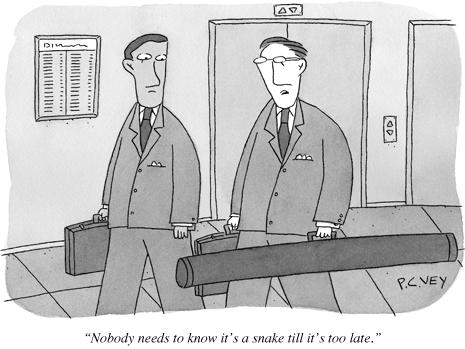
Bringing a snake to a knife fight

(Continuing the theme of the previous post by K. Listenbee.) From this week’s issue of the eponymous magazine of the City so nice they named it twice: a cartoon on the ethics of deception in adversarial negotiations.


(This cartoon is retransmitted without permission and will be removed upon request.)

Is bluffing just business, or is it bad business?

Consent and fair play can both provide reasonable justifications for the deceptive behavior in some contexts. If you agree to play poker with me, you can’t complain if I bluff — though you certainly could complain if you caught me playing with a marked deck. But these reasons do not necessarily work in the case of all adversarial institutions.

To an extent, part of what adversaries do is deceive and coerce people in order to win the game that they are a part of. This deception amongst adversaries is part of the game, not accidental. The minute difference between a foul and an intentional foul in the sport of boxing is just one example. In order to win, some boxers try to disguise intentional fouls as mere accidents. In his book Ethics for Adversaries, Applbaum argues that those within adversarial institutions have a better chance of getting away with actions that might not be as acceptable in other situations.

“One cannot coherently claim that one aims at the good ends of a competitive system if one seeks to undermine features of the system that make it good. Perhaps the claims that adversaries make about their aims and the actions that they take cannot be made to cohere. Or perhaps the good ends of the system are for its practitioners a sort of idle hope that is unconnected to what their actions aim at. But there is no plausible way to redescribe the violation that adversaries aim at as accidental, a foreseen but unintended side effect. If, to pass a test of reasonable acceptance, actions cannot aim at violation, then much of the violation that results from adversary institutions does not pass the test” – Applbaum, p. 187

When one plays to win, it can often involve actions that undermine the aims of the game. If adversaries are aiming at good ends, then the violations they inflict upon one another can be reasonably justified. As the final sentence of the quote implies, however, not all violations of normal moral codes (like honesty) in adversarial institutions are accidental.

In short, for Applbaum, the good ends of deliberately adversarial institutions will not always justify the means if the means are deliberately unethical.


Diving in soccer is like [blank] in business

In the comment-thread to a post by “Matiok” about soccer dives, below, I suggested that diving is in some sense significantly worse that most other fouls in sport (say, among fouls that do not involve significantly injuring your opponent). This is because diving involves a player who was not able to better his opponent on the field, and so instead decides to accuse the opponent of a foul in order to gain an advantage. You can’t win fair and square, and not only do you cheat, but you accuse your opponent of being the cheater.

There isn’t a good word for “chickenshit” in formal academic ethics. “Hypocrite” doesn’t quite capture the ethical nastiness of that kind of competitive tactic. (Yes, I realize it’s much more complicated than that, and that we have to look at the way the institution of soccer has evolved, etc, etc. I’ve done some of that in my other blog, here and here.)

But in this post I want to think about how we might fill in the blank in the title of the post. What, in other adversarial realms (like business or politics), resembles diving in soccer?

Well, here’s something similar. In a Reuters story yesterday we learn that:

Nickolas Galiatsatos, owner of Nina’s Bella Pizzeria in Upper Darby, Pennsylvania, is accused of putting bags of mice at nearby competitors on Monday afternoon, according to Upper Darby Police Superintendent Michael Chitwood.

The owner of Verona Pizza watched Galiatsatos go into his restroom carrying a bag but emerge empty-handed, and alerted two patrol officers who were in the restaurant, Chitwood said.

The officers found a bag of mice and footprints on a toilet seat, suggesting someone had been trying to reach the ceiling tiles, he said.

The officers then found Galiatsatos near another pizza place, Uncle Nick’s, where he was seen putting something in a trash can. There, police found a bag containing five mice, Chitwood said.

“This guy planted them to put these guys out of business,” Chitwood said. “I’ve been at this for 47 years, and I’ve never seen mice used as a criminal tool.”

Like many divers in soccer, he claimed he had to do this because his opponents were doing the same to him:

Galiatsatos claimed his shop had been infested with mice, and he blamed his competitors for the problem, he said.

Chitwood said that Galiatsatos told police he bought the mice at a pet shop for $10.

He faces misdemeanor charges of cruelty to animals, criminal mischief, harassment and disorderly conduct.

A misdemeanor?! You can NOT be serious, ref! Surely that’s a red-cardable offense.

Are some elections literally slam dunks? Did your Congressman win the way Blake Griffin did?


[Note: this is the inaugural post by Brandon H.]

Is politics a sport? Some things such as the rules in sports and the referees who enforce them seem accurately analogous to election laws and the election boards and courts that enforce them. Other more controversial comparisons have been suggested, none more interesting than the comparison between spectators and voters.

The simplest argument against this comparison is that spectators in sports may influence the outcome of the game but they do not directly determine it. To work around this objection, let’s see if there are similarities between (a) voters and speculators in the 2011 NBA slam dunk contest — an example of a sporting event where spectators do have more of a say in the outcome — and (b) the voters in the 2010 mid-term congressional elections.

The 2011 Slam Dunk Contest, which took place in Los Angeles, was highly anticipated for one major reason, the participation of the exciting and high-flying rookie phenomenon Blake Griffin. Blake plays for the local Los Angeles Clippers and opened a nationwide competition that aimed at giving him new dunks that he could use on national TV. Day of the competition Blake was able to electrify the fans and won the competition in convincing fashion. Even those who supported Blake’s victory question whether he was the best actual dunker in the competition. ESPN columnist John Hollinger says “in truth, McGee should have been facing DeMar DeRozan in the final instead of Griffin, but the hometown Los Angeles crowd swayed the judges heavily in Griffin’s favor.” He goes on to say the excitement in the arena every time Griffin dunked was electric and though “it’s not necessarily fair… it’s the reason he won.” In other words he may not have been the best dunker that night, but he knew how to work the crowd and do things they would love, and it was this quality that delivered the trophy.

How does this compare to political campaigns and voters? In recent history there has been a growing trend in campaigns to engage in negative advertising. Often these ads have no information about the candidate’s platform and amount to little more than personal attacks. According to the study by Amherst 54% of ads in 2010 were pure negative advertising. The truth is, whether voters want to believe it or not they are being treated much like the spectators in the Slam Dunk contest. Politicians are trying to distract the voters from the true issues and play to their emotions in order to win. Just like Blake Griffin.

Something to think about next time you hear a political consultant or pundit referring to some candidate’s chance of winning as a “slam dunk.”

New blog alert: Bleeding Heart Libertarians

Ethics for Adversaries is a newish kid on the blogging block. In the life-cycle of a typical blog, it’s probably a toddler now; just beginning to find its legs and sometimes capable of walking in the direction it intends, for at least a few steps.

There’s an even newer kid, though. Still wrapped in blankets and being passed back and forth between parents and nurses: Bleeding Heart Libertarians. It is the brainchild of a clutch of unusually large and active brains, who will occupy themselves there with questions of how to formulate and justify an urbane libertarian-like political philosophy. They don’t put it this way, but the name they chose for the blog could be replaced by “How to be a libertarian without being an asshole.” (I had a professor as an undergrad who wrote a book manuscript with the socialist version of that as his working title.)

In the actual words of one of the founding bloggers, Matt Zwolinski, a philosopher at the University of San Diego:

I’ve created this blog as a forum for academic philosophers who are attracted both to libertarianism and to ideals of social or distributive justice.  Labels are often a greater source of confusion than insight in academic discourse, and no doubt most of the contributors to this blog will wish to qualify the sense in which they fit this description.  Some, for instance, will qualify their libertarianism with a label – “left-libertarian,” or perhaps “liberaltarian.” Others might prefer to think of themselves as “classical liberals” or even “market anarchists.”  But libertarianism, as I’ve argued elsewhere, is a broad intellectual tradition bound together more by rough agreement than by meeting a set of necessary and sufficient conditions.   What we have in common on this blog is an appreciati0n for market mechanisms, for voluntary social cooperation, for property rights, and for individual liberty.  But we appreciate those things, in large part, becauseof the way they contribute to important human goods – and especially the way in which they allow some of society’s most vulnerable members to realize those goods.

Not everybody who is concerned about the design of, and ethics within, deliberately adversarial institutions will consider themselves to a member of Matt’s broad coalition. But everyone in that tent should be interested in the challenges raised here at Ethics for Adversaries. So with this shout-out I happily send them what may well be their first ping-back.

Best of luck, fellows (for so far their team is very masculine). Let us know when we should cross-post.

Bipartisan or Bust?

It seems that nearly every time President Obama or Speaker of the House John Bohener makes a speech the magic B word is somewhere in it—bipartisanship. Just yesterday when the Senate passed a stopgap measure to avoid a government shutdown, Obama said, “I’m pleased that Democrats and Republicans in Congress came together and passed a plan.” Throughout his campaign, Obama also crafted an image of bipartisanship. I can’t help but ask the question, do Democrats and Republicans truly want to work together like they claim? If they do, then there actions (like voting to repeal “Obamacare” by the Republicans or walking out of the Wisconsin state legislature by the Democrats) don’t seem to match their words. And if they don’t actually want to be bipartisan, then why do they insist on spending so much time on it?

The American political party system is an example of an adversarial institution. What makes this institution so interesting is that nothing in our Constitution creates a party system, in fact our founding fathers warned against the influence of parties. Now, however, we have a highly regulated system with complex rules and the party system is one of the foremost features of American democracy. There is a common notion, however, that the party system is somehow detrimental to our democracy and that being an “independent” is a matter of pride.

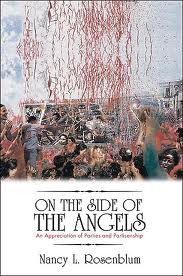
Nancy Rosenblum, a Harvard professor of government, writes in her book On the Side of the Angels: An Appreciation of Parties and Partisanship, that there is a notion in America that anti-partisanship is an ideal to strive for. In an interview with the Dartmouth student newspaper, she said that “Anti-partisanship is as old as politics and as old as the dinosaurs.”

Rosenblum, however maintains that partisanship is exactly one of democracies strongest positive features, and without it the system of American democracy that exists today would look totally different—and worse. “We don’t need independence or post-partisanship, but better partisanship.”

So, maybe instead of always throwing out empty words about bipartisanship and “above the Beltway” rhetoric, our political leaders could do well to reexamine their own party politics.

Be careful what you ask for; you just might get it

In a 1923 essay called “The Ethics of Competition,” Frank Knight, who would become one of the founders of the Chicago School, thought that business had become a kind of game or sport, and he wondered how good or “healthy” a game it was.

Knight begins his classic text by rehearsing the argument from an earlier essay of his, “Ethics and the Economic Interpretation.” He had previously tried “argue against the view of ethics most commonly accepted among economists…” It was, he argued, “against ‘scientific ethics’ of any kind, against any view which sets out from the assumption that human wants are objective and measurable magnitudes and that the satisfaction of such wants is the essence and criterion of value…”

The problem with the so-called “scientific ethics” – by which he means some kind of utilitarianism – is that it cannot really distinguish between “higher” and “lower” wants, and therefore reduces the former to the latter.

But, Knight argues,

the fact is that human beings do not regularly prefer their lower and more “necessary” needs to those not easily justified in terms of subsistence or survival value, but perhaps rather the contrary; in any case what we call progress has consisted largely in increasing the proportion of want-gratification of an aesthetic or spiritual as compared to that of a biologically utilitarian character, rather than in increasing the “quantity of life.”  The facts, as emphasized, are altogether against accepting any balance-sheet view of life; they point rather toward an evaluation of a far subtler sort than the addition and subtraction of homogeneous items, toward an ethics along the line of aesthetic criticism, whose canons are of another sort than scientific laws and are not quite intellectually satisfying.

In short, for Knight, we cannot judge how valuable or successful our lives are in the same way that companies organize and analyze a balance-sheet. In the financial arena the balance sheet is used to analyze what a company has (assets) and what it might be risking or not have (liability).  But how would we ever make sense of the owner’s equity section in a balance sheet? And how are we supposed to ensure that the assets and liabilities sides of the balance sheet should be equal or balanced?

Knight rejects the view that is still predominant in economics more than 75 years later, of “want satisfaction as a final criterion of value.” We can’t accept that because even in our own lives we don’t “regard our wants as final; instead of resting in the view that there is no disputing about tastes, we dispute about them more than anything else.” In fact, for Knight, “our most difficult problem in valuation is the evaluation of our wants themselves and our most troublesome want is the desire for wants of the ‘right’ kind.”

This is a profound, and these days much more widely accepted, critique of utilitarianism. Why is it relevant for adversarial ethics? Because we need to be able to judge whether the market system produces better overall results (via the invisible hand) than some other system. But how do we evaluate what is a better overall result? Not, Knight is arguing, by judging whether it satisfies more wants. We might not really want those wants. Or worse still, as he will go on to argue in this essay, because the system (or adversarial institution) itself has generated the wants that it satisfies.

Sometimes a founder of the Chicago School can sound remarkably like a founder of the Frankfurt School….


Red carpet: red in tooth and claw?

[Note: this is the inaugural post by K Listenbee.]

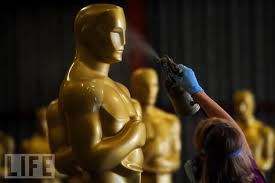
Sunday evening was highly anticipated. From the red carpet to the after-parties, the 83rd Academy Awards was a night to remember — as indicated by tweets, facebook statuses, and even the CNN hot topics list. All eyes might be on the red carpet fashion police and the list of winners and nominees now, but the first Academy Awards ceremony took place out of the public eye. The celebration and recognition of filmmakers and actors still exists, but has the Academy Awards become, along the way, an adversarial institution?

Once upon a time…

May 16, 1929 marked the beginning of a phenomenon – one that now garners more attention and acclaim than some political campaigns. An initially non-adversarial arena, the Academy Awards began as a way to honor the best of the best in the film industry. The first ceremony had a modest guest list, with 270 people in attendance, and only 15 awards were given. It took place during a brunch that was served at the Hollywood Roosevelt Hotel, followed by a party at the Mayfield.

Being recognized as the best in the industry had yet to become center stage, literally. Shortly after its inception, however, enthusiasm for the Academy Awards skyrocketed — a Los Angeles radio station even produced a live hour-long broadcast of the event. Public interest grew exponentially over the years. Rules, regulations, and qualification criteria began to develop. Actors and actresses began to compete for leading roles. Studios sought out the most highly acclaimed producers, directors, and writers in the industry. Thus, an adversarial institution emerged.

“And the Oscar goes to…”

The first awards ceremony had no real surprises. Winners were announced three months before the ceremony took place. The following year, the Academy decided to reveal the winners during the ceremony. The anticipation of winners and the growth in media attention surrounding the second award show aided in the shift: taking something essentially non-adversarial — the recognition of works of art — and putting it in a competitive setting.

Those within the film industry eventually began to take into account the actions of other players in anticipation of what they may or may not do to win. They have also developed tactics to improve their own chances of winning. Some of these tactics involved spending huge amounts of money on gifts and other goodies to influence the voting members of the Academy. And this in turn led to the Academy developing increasingly complicated rules and regulations to forbid “unhealthy” competitive attempts to “buy votes.”

Some accuse the Academy Awards of being influenced by marketing, rather than artistic quality. Others defend artistic merit as the sole requirement to win in this adversarial game. Whatever the case, for many filmmakers, actors, and spectators, the Oscars are not about the impartial recognition of an artistic achievement. They about winning – and by any means you can get away with.


The fine art of the dive

[Note: this is the inaugural post by “Matiok”.]

We should be able to learn a lot about cheating and rule-breaking in all adversarial contexts by examining the clear-cut transgressions we find in sports. Of all of the kinds of cheating in sports, there seems to be something uniquely annoying (or interesting? entertaining?) about diving in soccer. (It is obviously similar to flopping and diving in other sports — except in the sport of diving, of course).
And of all the spectacular dives every week in the world of soccer (many showcased on a fabulous blog, The Diving Board) this one has been garnering an unusual amount of attention lately:
Here’s what The Diving Board has to say about it:

FOR SHAME! This is a whole new level of cheating. Not only has Chile’s Bryan Carrasco taken a ridiculous flop to the turf, but he’s also forced his opponent’s hand up into his face in a pathetic and desperate attempt to win a free kick in his own half. A part of me wants to applaud him for originality, but NO! Just no.

Bryan Carrasco, if you are the future of football then god help us all…

We will talk a lot about the case of soccer diving in future posts. But for now, let’s reflect on this particular innovation in the world of diving. Is it worse than more “typical dives” where players go to the ground in search of a free kick or a penalty kick after minimal or no contact with the opposing player? It does seem quite pre-meditated, doesn’t it? Surely the player thought about this trick before the game began. Perhaps he even practiced it. If so, were other players “implicated” in his scheme? Was his coach? If the referee had been close enough see exactly what happened, the diver himself might have been red-carded (ejected from the game, thereby forcing his team to play the remainder of the game down a man). All considerations of sportsmanship, ethics, and civilization aside, was it worth that risk? Does this player really believe that referees in the future will give him the benefit of the doubt when he is involved in dubious fouls? Does the sport of soccer itself lose credibility with this kind of publicity?

Who needs trade unions?

So far on this blog we have not talked much about the choices between adversarial and non-adversarial relations inside of firms. But this is a great context in which to sharpen our understanding of adversarial ethics, because we do have experience with much more and much less adversarial corporate cultures and industrial relations.

The legal recognition and buttressing of labor unions from the late 19th century until, say, the 1980s, could be described in two ways: either as instituting deliberately adversarial mechanisms in the governance and management of firms, or as making an already-adversarial relationship between owners of capital (and their managers) and laborers less unfair. There are other ways of describing this contested institution, for sure.

We’ll talk much more about what goes on inside the firm in the future; but at this point I would just like to flag a brief debate going on in the blog space at The Economist. Mark Thoma, an economist at the University of Oregon, proffers a brief answer to the question “What good are labour unions?” His one-sentence answer is, “Governments should replace unions as a protector of workers.” And of course, in many ways they have. Government occupational health and safety legislation, along with extensive bodies of employment law, now give to all workers what unions had to bargain tooth-and-nail for on behalf of their members.

But however important unions may have been in the past (and for Thoma this is an open question), he argues that:

In an increasingly globalised world where digital and other technology allow firms to easily escape unionised labour, unions have lost their ability to act as an equalising force in negotiations over wages and benefits.

Global labor organisations could provide an alternative, but this would require global institutions that do not presently exist, and that do not look likely to emerge anytime soon. For now, the answer has to come domestically and the only institution powerful enough to protect workers is government. Government-provided health and dental care, security in old age, workplace safety, insurance against job loss, higher education that is essentially free, and other such benefits would go a long way toward remedying what workers have lost since the 1970s. In addition, government redistribution of income may be needed to ensure that economic gains are shared more equitably. In combination, this would provide the things that unions fought to get for workers and maintain the current social protections that government provides.

There seems to be a general trend to make more institutions adversarial, competitive, or “market-like.” Ed Sullivan got people to watch singers and dancers on TV, but now we won’t watch them unless they’re competing against each other and we can vote on who wins. But here is a proposal to make one very important economic and social institution — the firm — less adversarial. Or maybe just less fair.

Sh-Boom, maybe life isn’t a game

We can’t understand what might be special about the regulation of, and ethics within, adversarial institutions unless we can get a clear idea of what analogous non-adversarial versions of those institutions might be like. It helps to be able to contrast a sport like gymnastics with an art form like modern dance; or to compare inquisitorial legal systems with those that structure a competition between the prosecution and the defense; to think about the relative merits of benevolent dictators and democratically elected leaders (and to think hard about which category we would want to stick Mike Bloomberg in).

In the previous post, we see the economist Milton Friedman almost instinctively assuming that life in general is but a game or sport. But lest we forget, this is not the way most poets have thought about life. The 1954 doo-wop classic, “Sh-boom,” comes to mind. You can find all you need to know about the song here.

There doesn’t appear to be anything especially adversarial about the Crew Cuts’ vision of life as a dream.

Oh, life could be a dream (sh-boom)

If I could take you up in paradise up above (sh-boom)

If you would tell me I’m the only one that you love

Life could be a dream, sweetheart

I mean, the singer doesn’t even seem to be concerned about the possibility of a rival with whom the sweetheart might possibly find an even dreamier life. Of course, it is all rather hypothetical. Life could be a dream. Maybe that’s because he currently experiences it as game (like the similarly crew-cut Milton Friedman) or… a battlefield.


For Milton Friedman, life is but a game, sweetheart

(Note: This is the inaugural post by “tiaramer.”)

One big open question for those thinking about ethics in deliberately adversarial institutions concerns how literally or directly we can transplant the vocabulary of sports to other domains. Are markets, for example, just games, or just like games, or only metaphorically and very imperfectly like games?

For Nobel-prize-winning economist Milton Friedman, this question doesn’t seem very open at all. He seems to take it as obvious that not only markets, but life in society in general, is very similar in structure to a game.

The day-to-day activities are like the actions of the participants in a game when they are playing it; the framework, like the rules of the game they play. And just as a good game requires acceptance by the players both of the rules and of the umpire to interpret and enforce them, so a good society requires that its members agree on general conditions that will govern relations among them, on some means of arbitrating different interpretations of these conditions, and on some device for enforcing compliance with the generally accepted rules. As in games, so also in society, most of the general conditions are the unintended outcome of custom, accepted unthinkingly. At most, we consider explicitly only minor modifications in them, though the cumulative effect of a series of minor modifications may be a drastic alteration in the character of the game or of the society. In both games and society also, no set of rules can prevail unless most participants most of the time conform to them without external sanctions; unless that is, there is a broad underlying social census. But we cannot rely on custom or on census alone to interpret and enforce the rules; we need an umpire. These then are the basic roles of government in a free society: to provide a means whereby we can modify the rules, to mediate differences among us on the meaning of the rules,  and to enforce compliance with the rules on the part of those few who would otherwise not play the game.” (Milton Friedman, Capitalism and Freedom, 1962, p. 25; emphasis added)

So for Friedman we willingly, and usually unthinkingly, accept many of these “rules of the game” although we may not know their origins. And if we don’t, there is always an “umpire” there to enforce them anyway!

But his thorough-going acceptance of the direct parallel between good games and good societies raises more questions than it answers. Even if markets can be quite game-like, what does it mean for life in general to be compared to a game? Are we talking about the same kind of “goodness” when we think about a “good game” and a “good society”? Does a “good” society really require acceptance of rules by all of the citizens?

And what if you don’t want to “play” any more? Is it even possible to pick up your bat and ball and go home?


Adversarial ethics under the stars: competitive time-wasting in K-Ville

This is the inaugural post by Leonard Ng’eno and Michael McCreary.

Hours before this year’s basketball showdown in Cameron Indoor Stadium between consummate rivals Duke and University of North Carolina Chapel Hill, the chancellor of UNC—Holden Thorp—took an early swing at the Blue Devils by tweeting, “Our students are talking about the future and asking smart questions instead of wasting time sitting in a tent.”[1]

The Krzyzewskiville tradition involving hundreds of Duke undergraduates camping out for weeks in advance to get their single-square-foot claim on courtside real estate for one of the most highly anticipated events in all of sports has become iconic of both the institution and fandom at large.  Duke fans, or Cameron Crazies, are known for their intensity and are proud to serve as the “Sixth Man” on Duke’s squad, providing an added advantage for the home team which is soundly reflected in the record books.  As Duke undergraduates, we were obviously offended by Thorp’s cheap shot at our tradition, our team, and our friends, but after the initial sting began to fade we started to wonder: Was Thorp right?  Is spending a month in a tent in order to see a premier basketball game a waste of time?

We’ll let K-Ville residents speak for themselves as to whether or not their month outdoors was worth their while this year; the specific questions we wish to address are these: What is the function of K-Ville?  What are its shortcomings?  And is there a preferable alternative?

The necessitation of K-Ville comes from the foundational economic principles of supply and demand, where supply represents the limited number of seats available and demand represents the number of undergraduate students vying for those seats.  This excess demand creates the need for some filtration process to achieve equilibrium.  In effect, tenting at K-Ville serves as a kind of “price adjustment” mechanism, increasing the cost (not monetary, but physical) of attendance and as a consequence lowering the demand.

K-Ville, and lining up in general, functions from a deliberately adversarial point of view where many students are competing against one another for a limited number of seats.  The principal shortcoming of K-Ville is that very few students—including the ones who participate—enjoy sleeping out in the cold while concurrently paying for a nice, heated room: grades suffer, relationships are strained, and comfort is sacrificed.  Yet, it is K-Ville residents themselves who dictate their own fate.  Living in a tent is not, strictly speaking, a requirement of attending the game.  Admittance relies on a “first-come first-served” policy, and K-Ville residents are merely admitted because they are the first in line.

In this way, we can see how lining up poses a serious collective action problem; one which, according to Professor Joseph Heath, “can easily degenerate into a race to the bottom, in which each individual, responding to the actions of the others, generates an outcome that is successively worse, but where each iteration of the interaction only intensifies their incentive to act in the same way.” While lining up early may be in one’s own self-interest in order to guarantee a spot, the inherently competitive move prompts others to line up earlier as well and can eventuate into months of waiting for hundreds of students.  On the other hand, if the amalgam of attendees turned up just an hour before the game, the result would be the same as if they had lined up in the same order months ago.

The primary problem in dodging this race to the bottom, however, is that there is no way to know who would commit to lining up first without going through the process genuinely (i.e. with every intent to sleep there for the entire duration).  It could be conceived that one year K-Ville residents decided to form a pact, after completely intending to stay there the whole time, that said they would each get in line in their set order an hour before the game and avoid camping out.  However, problems with this solution would be that there would be no way to prevent others from lining up during that time or to ensure that signatories of the pact would not break their oath.  Furthermore, such an agreement would, to some extent, undermine the legitimacy of the next year’s line, as some might line up with an expectation to make another pact while some might not line up at all, thinking that they could just outwit the people who make the pact this time around.  In essence, there doesn’t seem to be any way to artificially generate and ensure the results of the natural queuing process.

To tackle this problem, we need to reduce the demand for seats by setting up a fair competition that does not lead to a race to the bottom.  In arriving at our proposed solution, we took as a premise that a fair competition is one that favors those who want to go to the game the most (i.e. those who are willing to pay the highest price).  This premise is not only founded upon common marketplace ideas, but also seems to be the source of legitimacy for the existing queuing system.  Thus our method was to find some competitive system that would allow the most devoted students to demonstrate their fanaticism by paying a more productive and fun cost than standing in a line.  By definition, costs are rarely productive or fun (you aren’t going to reduce demand by giving people free candy), and so it took some thinking to come up with something, but in the end we were pleased with our solution.

We propose setting up a competition based on attendance of other Duke Athletics events.  Those who have attended the most Duke games, of any sport, would get priority for the seating to men’s basketball games, including the marquee matchup with UNC.  The university already has a system in place that rewards students for attending sporting events, called The Inferno.  We suggest that The Inferno be expanded to not only give points to students for attending games, but also to reward students with game seats when demand is expected to exceed supply. Thus by basing admittance to the Duke-UNC game on a student’s attendance at other Duke games, we avoid the race to the bottom result that forces students to camp out for longer and longer periods each season in order to attend one game.


[1] Thorp has since taken down the tweet and apologized.

Politicians and Professors

Some professors go into politics. Some politicians later become professors. But is there any reason to think the rules of the two “games” should be the same?

See this article by David D. Perlmutter, in the Chronicle of Higher Education: Why Politicians Should Be More Like Professors. Perlmutter points out that President Barack Obama has sometimes been accused of being “too professorial.” But just what, asks (Professor!) Perlmutter, is wrong with that? He suggests several ways in which it might actually be good if politicians adopted a more professorial demeanor. His final suggestion is that politicians need to be more like professors in their willingness to work together to solve shared problems. “More than in any other trade, professors will sit down, work together with people with whom they hold deep ideological differences, and get the job done.” As for politicians: “It’s fine to be partisan about ideas,” he says, “but governing must be collaborative.”

By way of prescient rebuttal, see this piece by our friend (and sometime professor) Andrew Potter, writing in the Ottawa Citizen: Gangster Politics.

In a philosophical debate, what everyone involved is trying to get at is the truth. As a result, each party has a vested interest in the discussion remaining as rational and free of bias as possible. Even better, the truth is what economists call a “non-rival good” – many people can partake in the truth at the same time without anyone’s share being diminished.
In contrast, what is at stake in the political realm is not truth but power, and power (unlike truth) is a “rival good” – one person or group can wield power only at the expense of another.

Unfortunately, the very essence of politics makes partisanship inevitable….

In general, if you’re going to propose new norms for a game, it’s good to have a clear understanding of what is really at stake in that particular game, first.

Even if it’s broke, don’t fix it

Should women lacrosse players be required to wear helmets? Should people be allowed to text and drive?

We learn a lot about the dynamics of regulation in deliberately adversarial institutions by looking at the social-science laboratories known as sports. The guardians of heavily regulated competitions in sports and life are presented with an irresistible solution whenever systematic “issues” arise within their contests: tweak the rules.

The guardians of a sport or, say, an industry, get to “play god” with it. But as any fan of science fiction knows all-too-well, those playing god, or accused of playing god, tend to lack god’s omniscience. They have a hard time foreseeing the dynamic consequences of their rule-tweaking. This is especially true when putative solutions involve simple technological fixes. Game-players excel by using strategic rationality, so rule-changes will change behavior, but not always in the direction the regulators intend.
Across the sporting world, the past year has been the Year of the Concussion. The Onion recently satirized the trend with its article on “Puppy Bowl Marred by Tragic Spinal Injury.”
The injury, which occurred only minutes before the Kitty Halftime Show, followed a routine midfield burst of play. Slow-motion footage from the sideline and water-dish cameras show Alvin romping flat out down the sidelines before taking a risky crossing route to come at the football from an angle, at which point two larger puppies, Amy, a golden retriever, and Big Red, a 13-week-old shepherd mix, laid a massive hit on Alvin, who responded with a shrill yelp that was suddenly and ominously cut off.

Dark stuff.

But if competitors can use strategic rationality, so can regulators. A fascinating case study is going on right now in NCAA women’s lacrosse. Unlike their male counterparts (who play a vicious, gladiatorial game), the women play with speed, finesse, and without helmets. And sure enough, they get concussions. A lot of concussions.

Simple solution: make them wear helmets. Or not. As the New York Times reports in a provocative article entitled A Case Against Helmets in Lacrosse, many inside the sport believe that introducing helmets would simply lead to more violent or reckless play — and thus to more head injuries, not fewer.

“It’s hard to absolutely prove, but what we’ve seen is that behavior can change when athletes feel more protected, especially when it comes to the head and helmets,” said Dr. Margot Putukian, Princeton’s director of athletic medicine services and chairwoman of the U.S. Lacrosse safety committee. “They tend to put their bodies and heads in danger that they wouldn’t without the protection. And they aren’t as protected as they might think.”

Of course, this does not show that every regulatory impulse is misguided. Automobile makers resisted installing seat belts for years, and did not work on designing more effective seat belts until relatively late in the game. Eventually, they were forced by regulators in the 1960s and 70s to make seat belts mandatory. But even then many dissenters continued to argue that belts would cause more harm than good: that it would be better to be “thrown clear” of the crash, than trapped inside it. (Yes, thrown clear at, say, 60 mph…into on-coming traffic.) Studies would eventually prove the effectiveness of good seat belts, and by the 1980s their use was becoming mandatory in most jurisdictions. It is doubtful that seat belts led to drivers becoming more reckless because they now felt safer and less prone to injury — though that has surely happened in hockey and American football.

Still, consequences of regulating are often unforeseen and perverse. Not least when the “players” do not observe the spirit of the new rules. There is clear evidence that texting while driving is extremely dangerous. More dangerous than illegal levels of alcohol in the driver’s blood. So many jurisdictions have banned texting while driving. Sensible? Sure. Has it reduced accidents? No: in an effort to escape detection, people are now texting in their laps rather than up over the wheel (where they can hope to see traffic in their peripheral vision), and texting-related accidents are on the rise.

“Tim Duncan Urges All-Stars To Use Inside Voice During Game”

The headline above was from The Onion last week. Like most articles in the satirical newspaper and website that calls itself “America’s Finest News Source,” the headline contains as much punch as the article that follows.

If you found it mildly funny (as, presumably, the 300 or so people who tweeted it directly from the site did), why? What is the underlying “truth” that the joke is riffing off?

Could it be that it’s playing on our instinctive, but usually inarticulate, understanding of the difference between ethics in “everyday” contexts, on the one hand, and ethics in “competitive” contexts, on the other?

In everyday contexts we teach children how to use “indoor voices” so they will not bother or annoy other people they are sharing space with. Like much of everyday ethics, it is designed to facilitate cooperation and solve collective-action problems (or in this case, collectively-sharing-space problems). You show respect for others, and make things go better for them, by piping down in their proximity.

But the last thing we want in a sports arena is for everyone to be using their indoor voices and sitting on their hands. Indeed, as discussed by student bloggers on this very blog recently (here and here), rowdy home-side spectators are part of the attraction and entertainment-value of sports for everyone. Even when that crowd noise is deliberately trying to help your team, and distract or demoralize the visitors, we all think that is perfectly acceptable from an ethical point of view. (Which is not to deny that there are limits to what kind of fan behavior is acceptable, as the previous posts emphasized.)

The great thing about satire is that it captures all of that in a headline or a caption. It takes a philosopher to spend 300 words sucking all the fun out of it.

Jump quickly over the gap

Following from the aesthetic analysis of business cartoons in the previous post, here’s another old chestnut on the same theme.

(This comic is reposted without permission and will be removed upon request.)

The inevitable gap between what’s legal and what’s ethical

Every writer I’ve ever read on ethics in adversarial settings takes explicit note of the obvious: that is it neither possible, nor desirable, in a deliberately adversarial institution to regulate away all unethical behavior.

As Arthur Applbaum puts it in the book that shares the name of this blog, if “the best of regulatory worlds is understood as a set of rules and levels of detection and enforcement that best balances the gains of eliminating the costs and harms and liberty restrictions of the regulations themselves, then the best set of regulations will legally permit a great deal of adversary action that is economically inefficient, harmful, and liberty-restricting.” (p. 196)

So we cannot expect that “the invisible hand of competition, even in a well-regulated market, will channel all adversary action to good ends.”

In this inevitable gap between what’s legal and what’s ethical we can pack a significant percentage of the best comics about business. Like this one from a couple of days ago.

(This comic is reposted without permission and will be removed upon request.)


The Ethics of Crazieness: A Follow-Up

I can’t resist writing a quick follow-up to the “How Crazie is too Crazy?” piece from earlier this week. If you follow college sports will know that the previous post came shortly before the storied Duke-UNC rivalry game. The game did not disappoint (especially for the Duke fans), as the Blue Devils made an historic comeback from a 14-point deficit at halftime to win by a final score of 79-73. Given the nature of the last post on “fan ethics” during sporting events, I think this game is a great case study of what should and shouldn’t be acceptable behavior for sporting fans.

Throughout Duke’s second-half surge, ESPN’s commentators’ voices could barely be heard over the broadcast as the Cameron Crazies filled the stadium with cheers. At one point, Dick Vitale called Cameron “electric” and after the game Coach K and Duke players all gave credit to the Crazies for motivating them. It was the first time Duke had overcome a deficit of 14 points to win since 1959. In rivalries like this, the crowd can play an important role. And surely that is what makes college sports so attractive to spectators. But should we allow more “extreme” measures from fans (obscene chants, gestures, etc) to be permitted in these cases? Does the fan’s passion for their team and game allow them to chant with a free conscience “Go to Hell Carolina, Go to Hell!” ad infinitum? (Ed. note for Carolina fans: that means “again and again.”) Interestingly, at Duke this is not only an acceptable chant, but is also frequently worn on t-shirts and so commonplace it’s simply abbreviated as “GTHC.”

To avoid rehashing the last post, I’ve decided to make three lists based on the latest game against UNC. Most of the things on the list can apply to any home game, but I’m using this particularly heated rivalry as a case study of sorts.

The “innocuous cheering” list which nearly any sports fan would condone as 100% within the realm of sportsmanship; the “borderline cheering,” made up of the gray area between being a good fan and violating an ethical boundary; and the “dubious cheering,” or just plain “jeering,” list, made up of actions nearly everyone (arguably even those of us performing the chats) know aren’t quite right. Obviously, this is only a personal opinion; and if you disagree with where I’ve put what, please feel free to comment. It’s up for debate!

Innocuous:

  1. The ever-present, always loud “Let’s Go Duke!” Cheer, or its equivalent (“Here we Go Devils!”, “Go Devils go!”)
  2. Jumping up and down and screaming while the opposing team has the ball. As in all sports cheering, the tactic is meant to distract the other team when they have the ball but has no mean intentions. This constant noise is one of the things that makes Cameron one of the hardest home courts to play on.
  3. Cheering when Duke makes a 3-pointer or Dunk.
  4. Body paint and face paint in support of Duke’s team colors.
  5. The “hex”. When an opposing team player fouls out, the Crazies are known to “hex” them by waving their hand and cheering until they sit and then yelling “See you!”.

Borderline:

  1. The Duke fight song with the student modified lyrics, “Carolina go to Hell! EAT SHIT!” sung the loudest (particularly during this game).
  2. The classic “Bullshit” chant following what the fans believe to be a poor call by an official
  3. Normally, I would put this clearly on the “innocuous” list, but a comment on the blogosphere about the physical presence of the Crazies made me bump it down. When the opposing team has the ball, in addition to cheering, the Crazies wave their hands at them while in-bounding. The students never touch the players, but the visual is compelling and the proximity of the students to the court is meant to intimidate opposing players. Some find this physical presence wrong, but as the students do not intend to physical harm the players I find it hard to categorize as “over the line.”
  4. When opposing team’s players are introduced the students “greet” them by chanting “Hi (insert name!)”. Although this alone I would find hard to object to, it has been tradition in years past to add “you suck!”, though in recent years Coach K has emphatically asked students to refrain from this (a cheer, notably, imported from the Maryland fan base).

Jeering:

  1. At one point a student was identified by a referee for attempting to have thrown something at Harrison Barnes, one of UNC’s top players.

Overall, however, I would say that more than anything the Crazies cheer for Duke rather than directing nasty things against UNC or their opponent. Sure, they want to get under the skin of the team they’re playing, but I would argue that the nature of the adversarial institution of sports allows for most of the Crazies type of behavior. Although, I must admit I am a bit biased as Cameron Crazy myself.

Judge for yourself based on this clip, taken from inside the student section: http://www.youtube.com/watch?v=ta09JvSoIsU

If academia were a professional sport

…and professors had bubble-gum cards vaunting their stats. From the comic geniuses at Piled Higher and Deeper:

And if pigs had wings….

Do we really care if political leaders lie to us?

This afternoon I attended a terrific seminar at the Kenan Institute for Ethics led by Amber Diaz, a PhD student in political science at Duke. Amber was presenting some preliminary results from a large survey she has conducted on Americans’ reactions to learning that their political leaders sometimes mislead them. According to the Kenan Institute’s web site, her dissertation is tentatively entitled: “Bumbling, Bluffing, and Bald-Faced Lies: Mis-Leading and Domestic Audience Costs in International Relations.”

It shouldn’t surprise readers of this blog that during the discussion of many different kinds and contexts of deception in politics, it seems to make a difference whether we interpret the deceptive politician as being engaged in an essentially competitive or a non-competitive activity.

In competitive “games” — especially those involving strategic rationality, where one party is taking into account how the other is trying to outwit her — we routinely leave room for “ethical deception,” or at least ethically excusable deception. Poker players can bluff, quarterbacks can pump-fake, pitchers can throw change-ups, negotiators can deliver a phony ultimatum, detectives interrogating suspects can trick them into believing they already have DNA evidence proving their guilt; and so on.

What about political leaders? Do we demand that they always tell us the truth, the whole truth, and nothing but the truth? We might be inclined to answer, “Yes, of course!” And when we say this it is because we are thinking about them as our public servants, with a fiduciary duty to look after our interests rather than their own. One of these interests is in knowing the truth, and not being manipulated or disrespected. We hate the idea that a political leader would lie to us because he knows full well we would not go along with his scheme. We hate it even more if he lies to us in pursuit of some personal or partisan interest.

Amber Diaz’s research aims to see just how righteously indignant we really are when we realize we’ve been duped. Is this something that we make politicians pay a price for? (Amber is more than welcome to post on this blog if she wants to tell us more about the answers her research and number-crunching are turning up!)

But the fact is, we are not always upset about politicians being deceptive, and not just in cases where we might want to say “I know he’s a sonuvabitch, but he’s our sonuvabitch!” Sometimes we recognize that politicians are engaged in deliberately adversarial contests; and we respect them for being wily in some of these situations.

This is most obviously the case in the conduct of foreign affairs (a realm Amber is looking at, in fact). Here we see our leaders as engaged, at least partly, in an adversarial contest against our national rivals or enemies. We expect them to deceive these rivals sometimes (e.g., to send spies and special ops into other countries), and this may well require that they deceive us too. Similarly, we might expect political leaders involved in sensitive international negotiations (e.g. for trade, or arms-reduction, treaties) to bluff and make hollow threats.

But we may even excuse deception within domestic politics precisely because we take seriously the constitutionally adversarial nature of democracy. Political leaders are not merely public servants with paternalistic duties to look after our interests. We have deliberately locked them into adversarial contests with rival politicians, and with rival sources of power in our society. We might want to tie one hand behind their backs in these contests. But if we understand the nature of our adversarial system, we cannot tie both hands. For this reason, as my colleague Kieran Healy pointed out in today’s seminar, we often gain a grudging respect for “successful” politicians who know how to win at the game we place them in — even when they are not “our sonuvabitch.”

In any case, if we are a bit confused or inconsistent in our evaluations or, or reactions to, political leaders lying — and this is what Amber’s preliminary data seem to be showing — it is at least in part because we are confused and inconsistent about how partisan or non-partisan we expect the game of politics to be.

Love is not a battlefield: it’s a market

And that’s why the New York Times can run a headline (in the Sunday Styles section…), Adam Smith, Marriage Counselor.

It’s a bit of a stretch. But when you come up with a sure-fire title for a book like “Spousonomics” (not to be confused with “home economics,” which was a whole nother thing — or is it?), all that remains is to find a bundle of theory and anecdotes to fill up the space between the covers. I haven’t read the book yet, so please take that as a plug and not a dis.

In the Times article, Jenny Anderson notes, after losing an argument with her husband:

I had just spent two years writing a book about how to have a better marriage. One secret, my co-author and I concluded, was to think like an economist: apply the rational laws of Adam Smith, as well as recent findings about why we do some of the weird things we do — mining the field of behavioral economics — to increase marital happiness.

Adam Smith, of course, is most famous for developing the “invisible hand” argument for how deliberately adversarial institutions like markets can produce benefits for the society that none of the “players” intended. “It’s not from the benevolence of the butcher, the brewer, or the baker that we expect our dinner,” he argued, “but from their regard to their own interest.”

Is that the way we want to think about a successful marriage?! Can “you scratch my back and I’ll scratch yours” get you all the way “until death do us part”?

Of course, incentives and mutually advantageous arrangements can help in both cooperative and competitive endeavors. And a family should surely be more about cooperation than competition. It is also worth remembering that Adam Smith never claimed that humans could be moved only by the pursuit of their own self-interest. The ability to sympathize and empathize with others, and to be moved to act on the basis of their needs was, for Smith, equally a part of human nature.

Seven years before he founded modern economics (and post-modern marriage counseling, apparently) with his famous Wealth of Nations, he published his Theory of Moral Sentiments which begins with the following much more Valentines-friendly observation:

How selfish soever man may be supposed, there are evidently some principles in his nature, which interest him in the fortune of others, and render their happiness necessary to him, though he derives nothing from it except the pleasure of seeing it. Of this kind is pity or compassion, the emotion which we feel for the misery of others, when we either see it, or are made to conceive it in a very lively manner. That we often derive sorrow from the sorrow of others, is a matter of fact too obvious to require any instances to prove it….

“Life is short. Have an affair.” Will adultery go viral?

The cover of this week’s BusinessWeek is devoted to their feature on the so-called “adultery economy,” and the lead article is on a “dating” business that specializes in hooking up married people with people married to other married people. On a slow-business-news Valentines Week, BW is getting all edgy by implying that this sector of the economy might be taking off.

It occurs to me that “cheating” in a marriage is a better example than Heath’s case of a surgeon cheating her patient with an unnecessary procedure, which Bethany discussed in a post here yesterday. Heath wanted highlight one important difference between ethics in adversarial institutions (like sports or business), on the one hand, and in relatively non-adversarial institutions (like the practice of medicine — at least in some domains), on the other. In the former, participants will feel the tug of incentives to cheat when they see their rivals getting away with cheating; but in the latter, one person’s cheating does not make cheating any more attractive for others.

The Pat Benatar song notwithstanding, marriages, and families more generally, are non-adversarial institutions. It may seem like one’s competing with others in the “market for spouses,” but once you find one, despite occasional disagreements and arguments, you are really supposed to be cooperating within this institution, not competing. (Of course, the terms of cooperation, and the hierarchical power structures, in families have not always been fair; but that doesn’t make them internal forums for competition.) So adultery, or cheating on your spouse, is a pretty clear example of cheating within a non-adversarial institution.

And surely Heath’s (and Bethany’s) point holds: learning that others are cheating on their spouses gives you no additional, compelling incentive to do the same.

All the free publicity BusinessWeek has just given the “adultery site,” AshleyMadison.com, will no doubt be good for business. But in answer to the question in the sub-title of this post, adultery is never likely to be as contagious as, say, steroids were in baseball, EPA is in cycling, or diving is in soccer. It will always be there, like a non-infectious disease, but there won’t suddenly be an epidemic.

That’s good news for all those who believe in the true spirit of Valentines.

Adversarial Ethics and the Sports Fan: How Crazy is too Crazie?

We can all agree that athlete’ s behavior falls under the purview of a deliberately adversarial code of ethics. In a basketball game, a player who fouls another as she’s shooting isn’ t considered immoral, rather she is violating a rule of the game. Further, we hold athletes and coaches to a code of “sportsmanship” that extends both on and off the court. They shouldn’t cheat even when they can get away with it; they shouldn’ tfake injuries to draw a foul or penalty on the other team, and they shouldn’t ingestperformance-enhancing drugs while training.

But, what about the fans? Is a team cheating if its fans behave in ways that give the team a strong home-court advantage? Very few of us will ever rise to the level of collegiate or professional athletes, but that doesn’ t stop millions of people from being heavily invested in the outcome of sporting events. Fans are often the worst perpetrators of both pre and post-game “ trash talk” and have been known to direct demeaning and even vulgar chants at opponents. Does adversarial ethics engage with this type of fan behavior? Or is does this kind of behavior simply fall under codes for what it is to be a decent person in general?

Consider the “Cameron Crazies”, Duke University’s die-hard, bleeding-bluemen’s basketball fan base. ESPN writes that the “Crazies have earned a reputation as the rowdiest, wittiest, best-organized college basketball fans in the land.” Known for camping out for the notorious Duke-UNC game in Kryzewskiville for up to two months,the Crazies are notorious for their rambunctious behavior in games.

A few years ago,ESPN’s “Page 2” series wrote an article on “Cameron’ s Craziest” moments. Some of the more controversial moments included:

  • After disagreeing with referee Dick Paparo’s call the Crazies chanted: “You suck, Dick!” (The comma wasn’t as evident in the verbal chorus.) It’s worth nothing, however, that Coach K was not a fan of this chant and demanded the Crazies, “ keep it classy.”
  • When a Maryland player was rumored to have sexually assaulted another student, the Crazies mockingly chanted: “HEY, HERM, DID YOU SEND HER FLOWERS?”
  • Although not listed in the ESPN article, I myself, as an admitted Cameron Crazy, have witnessed a few borderline offensive cheers. While playing an opponent where one of the team members was accused of sexual assault this year, some in the crowd chanted “NO MEANS NO!”

Often, chants are aimed to intimidate or  psych out”opponents, taking aim at their personal lives. Some chants even include profanity, although recently Coach K has encouraged Crazies to “be more creative” than that in his pre-game talks. So the question is, where do we “draw the line” between appropriate cheering and offensive, even unethical, fan tactics?

Certainly there are clear examples: when the Crazies cheer enthusiastically after a dunk or 3-pointer for instance, or when fans shout “Defense!” Such cheers that are simply in support of the fan’s team seem clearly within the appropriate range of fan tactics. Things become murky, however, when fans like the Crazies draw in personal attacks on players. It’s worth noting, as well, that these are not professional athletes, but rather 18-22 year old “student athletes.”

Is it right to mock these players for their personal lives, is it right to make light of subjects as sensitive as sexual assault in a sports atmosphere? And perhaps most importantly from the perspective of adversarial ethics, is it fair for the Blue Devils to gain an advantage on the court because of some of these dubious fantactics?

I certainly don’t have the answer to these questions, and I must admit that while in the mob mentality of the Cameron Crazies the answers clearly seem to be YES! Although I believe that much of our thinking about the adversarial ethics should extend to fans, I believe there is a strong case, particularly in college sports, for drawing a distinction between fun, competitive cheering and derogatory or mocking jaunts aimed directly at the personal lives of opponents.

[For a follow-up post, taking the historic Duke-UNC game of 9 Februrary 2011 into account, click here.]

Cheating in Adversarial Institutions: The Viral Effect

[Ed. note: here is the first of (we hope many, many) posts this spring by our Duke University student bloggers.]


If you were wondering how adversarial ethics is different from our “normal” conception of ethics, I think this passage from Joseph Heath’s paper “An Adversarial Ethics for Business” (published in the Journal of Business Ethics in 2006) is a good place to start.

“In a non-adversarial context, the fact that one person acts unethically does not in itself create any additional pressure on others to do so. For example, if one surgeon performs some unnecessary procedures, it does not necessarily give other surgeons a reason to do so. In a competition, however, the fact that one person is deriving an advantage from unethical conduct necessarily generates a disadvantage for everyone else, and therefore creates pressure for everyone to follow suit.”

In a non-adversarial setting, we don’t take one person’s ethical violations as an invitation or reason to follow suit. Heath uses the example of healthcare to illustrate this. (Note: Heath is approaching healthcare with a system like Britain’s or Canada’s in mind. In principle, these systems are much less competitive and profit-oriented than America’s system.) If one surgeon is using “unnecessary procedures” — perhaps to expedite the surgery or be able to bill for more — this does not necessarily motivate other surgeons to act the same way. Doctors swear to the Hippocratic oath and are generally expected to adhere to strict ethical standards and codes. And in any case, one surgeon’s cheating the system in this way does not take away business from the others, or in any other direct way threaten their livelihoods.

Now, take this same situation, but substitute in “baseball players” for “surgeon” and “steroids” for an “unnecessary procedure.” Baseball, like all sports, is a deliberately adversarial institution, a zero-sum game. Here we see, as Heath says, that one player’s getting an advantage from unethical conduct gives all the others player at least a reason, and maybe a very compelling reason, to do the same.

We might say that in adversarial settings, certain kinds of cheating or unethical behavior can spread like a virus, infecting even those who had no prior interest in cheating.

Should we be Worried When Competitive Arenas Compete with Each Other?

[Ed. Note: This is the debut post by founding member, Dominic Martin.]

The Deutsche Boerse announced this week that it was in advanced talks to buy NYSE Euronext in a deal that would create the world’s largest stock market.

And by complete coincidence, on the very same day, the London Stock Exchange Group (LSE) had also announced that it would merge with the TMX Group Inc. (who owns the Toronto Stock Exchange). Both of these mergers (Frankfurt-New York and London-Toronto) are presented as a necessary measure to compete with other stock markets at the international level.

So here is a big question. If competition is justified within properly regulated and self-contained competitive arenas, should it also be justified, at a “meta-level,” between these arenas themselves?

My intuitive answer is … yes.

Because competition already goes on at many different levels: corporations compete against each other (obviously), but also, in other ways, with their suppliers and their customers; consumers compete with each other over products that are scarce (houses, for instance, or art), and even national markets compete with each other to attract investors, increases their exports, and so on. What is a tax haven, if not a competitive national economy that plays “dirty” at that game? (Or so say highly taxed and less internationally competitive economies, like Canada or France.) Competition among stock markets also contributes to the dynamic that makes rivalry desirable in the first place.

However, a few things have to be kept in mind regarding the London-Toronto stock exchange merger:

  • What Canadians will gain, in terms of stocks volume, they will lose in terms of control over their own national stock market.

Even if LSE CEO Xavier Rolet is seeking to reassure Torontonian financiers, and even if the Canadian authorities will require some guarantees that TMX won’t lose all its sovereignty in the merger, the fact remains that the bigger player is the LSE. It will hold 55% of the share of the new corporation. It will occupy eight seats at the Board of directors, compared to seven seats for TMX. What will happen when UK’s financial interests conflict with Canada’s? To ask the question is to answer it.

In 2008 TMX acquired the Montreal Stock Exchange. Let’s just say that Montreallers’ interests would now be even further down the food chain.

  • If you are out in the market of stock markets, ready to merge with another player, why not go after the biggest one?

The TMX-LSE merger will create the biggest stock market in the world in terms of subscribers, but only the second in terms of market capitalization. The first one being the New York Stock Exchange (now I let you do the math if NYSE Euronext is acquired by the Deutsche Boerse). So why didn’t the TMX try to merge with that group? Shouldn’t Canadian’s benefit ever more from that transaction?

The fact that the stock markets owned by TMX and LSE specialized in similar product might be an acceptable rationale, however. Once taken together, the London and Toronto stock exchanges will become the biggest market for merchandise, natural resources, energy, and small- and medium-sized businesses in the world.

  • Did they really have a choice? And if not, what does the TMX Group should be accountable for?

Technological development (that allows decentralization of transactions) and the integration of world-wide economies (that increase the size of markets and corporations) have pushed many stock exchange to merge since 2000. Some like to say that these mergers are unavoidable (see Professor Louis Gagnon’s comments in the Globe and Mail for instance). If it is the case, does it wave all obligations for the corporations that own these stock markets? Ought they to promote their respective national interests?


Farmers, Organics, & the Ethics of Industry Organizations

Over at my Food-Ethics blog, I just posted a short piece called “Caution on ‘Green’ Claims for Organics”. It’s about a suggestion, from the head of a UK farming organization, for organic farmers to be cautious about claims that their produce is, categorically, more environmentally-friendly than non-organic foods.

The interesting thing from the point of view of adversarial ethics has to do with the role of industry associations. Industry associations are a mechanism by which businesses that would normally compete against each other engage in certain forms of cooperation. The catch is that some forms of in-group cooperation are socially beneficial (or at least innocuous) while others are pernicious. For example, when companies cooperate on standard-setting (so that, e.g., competing models of computers can all use the same peripherals), that’s a good thing. When they cooperate on prices, that’s called price-fixing, and it’s bad for consumers (and is illegal in most places). In the case cited above, the organization is calling for a stop to in-fighting over the virtues (in the strong, moralized sense of that word) of various products. Whether that’s socially beneficial depends, in part, on the significance of the moral debate that the organization is hoping to stifle.

“As if the heavens and the earth have been turned upside down”

To figure out what is different about regulation and ethics for deliberately adversarial institutions, we obviously need clear examples of (relatively) non-adversarial institutions.

If sports are the touchstone examples of deliberately adversarial institutions, then various physically challenging art forms (like modern dance, ballet, acrobatics, cheerleading, “pro” wrestling, a Bruce Springsteen concert…), ritualistic displays (including dances, running in front of bulls in Pamplona, standing on one leg for hours or days in India…), and forms of exercise (yoga, aerobics, sweatin’ to the oldies…) are the closest non-adversarial cousins.

The appeal of sports is that they put on display most of the physically beautiful or breathtaking features of those non-adversarial practices, but they add to it several elements derived from the competitive challenge: the incentive to innovate and improve, the uncertainty, the partisan affiliation of the spectator, the tactics and strategic rationality, defense, the thrill of victory and the agony of defeat. (And this is why we see so many attempts — some of them successful, alas — to move physical activities from the latter categories into the “sport” category, by using judges to decide whose yoga poses, dance routines, bodybuilding, skateboarding tricks, etc, deserve to “win.”)

And then there’s sumo wrestling.

Is it a sport or a ritual? Well it’s both, obviously. The Japanese public is said to consider “sumo — which traces its origins to rituals of Japan’s indigenous religion of Shinto — [to be] a venerable tradition. Wrestlers, their hair in samurai-style topknots, have been seen not just as athletes, but as upholders of a stoic work ethic and noble public behavior.” So how important is the “sport” part of this practice? Opinions are divided. But a recent match-fixing scandal suggests that the competitive element may be essential to maintain interest. (Police have found text-message evidence of two wrestlers orchestrating and fixing a match, as an article in the New York Times recounts. ‘“Please hit hard at the face-off, then go with the flow,” one of the wrestlers, Kiyoseumi, texted on the afternoon of May 10…’)

Some fans, it seems are not terribly worried about the draining away of the competitive element of sumo, as long as the illusion of competition remains. “It’s been going on from the old days,” Shintaro Ishihara, 78, Tokyo’s governor, told reporters Friday. “We should just let them trick us into enjoying it,” he said, adding, “It’s just like Kabuki theater.”

But other fans, especially younger ones, are voting with their feet (or their remote controls or smart phones) — deserting sumo in favor of baseball and soccer. There are surely plenty of reasons for sumo’s declining popularity in contemporary Japan. But the contempt of true fans in the face of cheating scandals is most telling — though we cannot be sure what it exactly it tells us. Is it that the ritual is just not interesting enough on its own unless we can believe that both adversaries really are doing everything possible to win? Or is it that by cheating, these guardians of ancient samurai traditions in the post-modern world are betraying the values of the “ritual” element of the sport?

The Japanese Prime Minister, Naoto Kan considers the scandals to be “a very serious betrayal of the people.” And the Chairman of the Japan Sumo Association, Hanaregoma, sighs that “It is as if the heavens and the earth have been turned upside down.”

Baseball in America is mostly sport, but also part national ritual. Still, the steroid scandal of recent years never prompted quite this reaction. So I suspect sumo is more ritual than sport — but that the deliberately adversarial nature of the ritual is an absolutely essential element.